Cornwall Park

Cornwall Park

Cornwall Park was gifted to the people of New Zealand in 1901 by John Logan Campbell. It’s my favourite city park – and it doesn’t hurt that I’m within striking distance – for a good walk. I was there over the weekend after dark for a 10 kilometre loop out and back home.

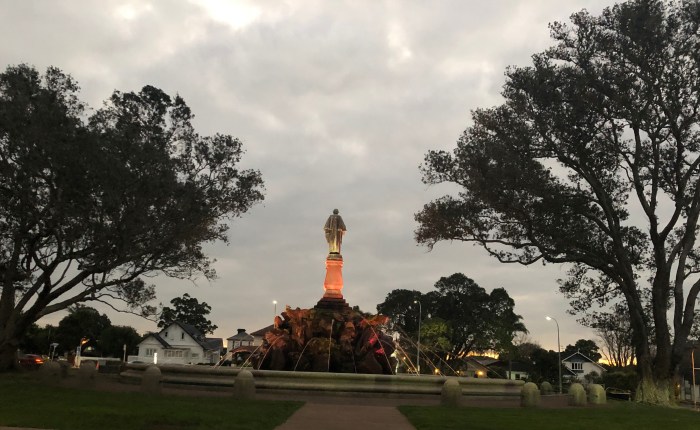
Last year I attended a wonderful talk by the lead landscape architect, Thomas Woltz, engaged by the Park’s Trust Board, to oversee a 100 year transformation. Excitingly some of the projects are already underway. At the Manukau Road end of the Park, which I suspect many people don’t think of as an entrance to the Park, the statue and surrounds have been lovingly restored and invigorated.
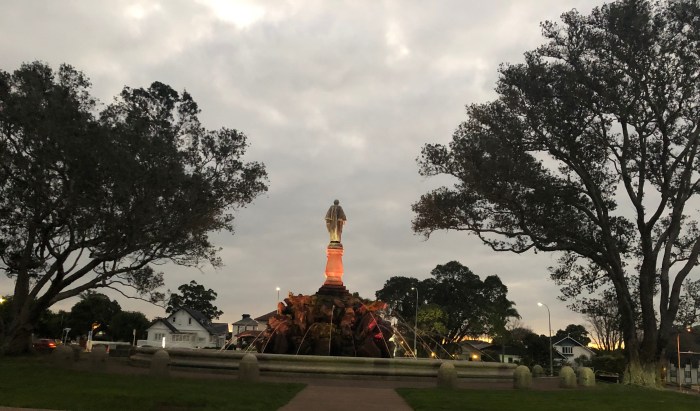
IMG_5568

From Manukau Road through to the Green Lane entrance past the sport’s grounds it’s a great route that I never tire of. Cornwall Park “proper” (my phrase) is full of mature trees, farmland, rock walls and Twin Oaks Drive. There’s nothing quite like it.

At night it’s completely unlit which is rare in the city and ideal for deep thought.

Watch out for sheep on night patrols though!

What better way to build resilience?

Stephen


A golden era

A golden era

often find myself thinking how many big things are not going right globally: climate change, our management and respect of the environment, fervent nationalism and the resulting damage to democratic institutions. 

I can make small steps on some of these things and show leadership to provide positive role-modelling and examples.

At the risk of sounding shallow there are some things that I think we might be in a golden era for. One of those is television.

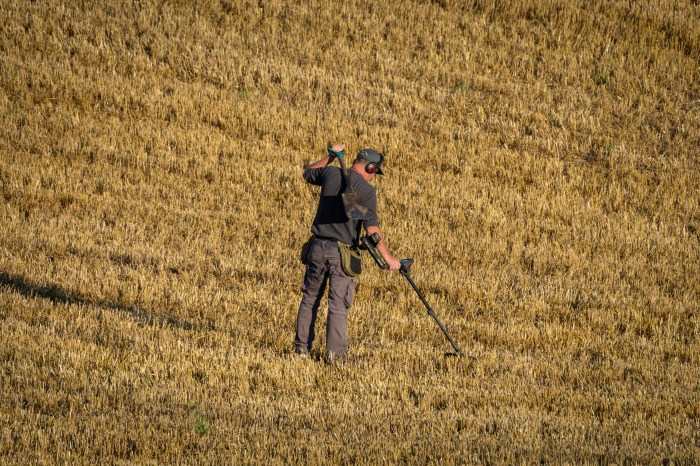
Watching detectorists on Netflix this last week was an outstandingly enjoyable experience. So much so I watched the entire two series through twice.

But wait, there’s more. They’re not going to give you the warm fuzzies like detectorists but The Americans, Homeland, Ozark and my personal favourite that I’m waiting impatiently for the third series of, Occupied.

iStock-1032524948.jpgDetectorists involves shallow digging and has deep human truths in it, but Occupied gets uncomfortably close to the current nationalism, foreign interference and environmental challenges as you might wish for. I had to double check that it really was conceived before the last US presidential election. It was.

Enjoy.

Stephen

M

A real life M visited PwC recently. That’s all I can say really!

But there were a few things I was authorised to mention just to my readers here.

There were a lot of questions about technology and talk about the current geopolitical environment.

iStock-808157966.jpg

What I noticed were some familiar themes from this seasoned security professional, that struck both a leadership and fraud prevention chord with me.

Sir John spoke about training and knowing your people as key factors that underpin an organisation (or country)’s security.  Quite basic things that you only notice you’ve overlooked them when something goes wrong.

He talked about focussing your security efforts on working out what is really valuable to your organisation, and then concentrating on protecting those assets.

Finally, he emphasised that security at an organisation begins with the leadership – it must be a strategic leadership responsibility – unless security of intellectual assets is taken seriously from the top – then it won’t receive the attention it needs.

Sir John Scarlett was asked about North Korea and its cyber attacks.  Technology has been a great leveler for espionage, he said, and I know this to be the case for fraud too:  small players in faraway places are just as likely to be a threat to your company as the local crooks.

He had some other messages about Russia, China, US, sharing of information between countries and 9/11, but in case that’s top secret I better save that for another day.

Stephen

Note:

Sir John Scarlett, the former head of the British Secret Intelligence Service (MI6) spoke at a breakfast function at PwC recently.  M is the fictional head of MI6 from Ian Fleming’s James Bond. In the movie Skyfall, M is revealed to be short for Emma. Lieutenant Colonel Gareth Mallory takes over from M played by Dame Judi Dench at the end of the film, assumes the moniker and reappears in Spectre.

Being late

Being late

If you’re like me you get your energy as the deadline approaches. Creativity kicks in and you do your best work under pressure. Every leadership programme or workshop I facilitate has people just like me in this respect. They are quite proud of what they can do in a short time frame and how much spare time they have for other things.

iStock-484068566.jpg

Dig a little deeper and most late starters have a level of stress that they know they could do without. Meeting work and other’s deadlines, finding no contingency time.

I (and others) try and trick me into leaving with enough time for appointments by putting in fake early starting times. It seldom works as I know. The other day I had a medical appointment. I arrived 15 minutes early thinking good, the fake entry worked. Turned out I was 45 minutes early as I’d faked my own fake time! So I settled into do some work and ten minutes later was called and was all done and out in another 10 minutes.

It was a surprisingly refreshing experience for me. There’s a good chance you’ll be thinking that this is normal. True for many people, but not for everyone.

You see them running into meetings late, functions at the last moment, joking at personal appointments about the traffic and so on.

If you get your energy and creativity from the deadline, I reckon hold on to that but look over the fence and for everything else find some calm and order in early arriving and getting started when you, deep down, know you should!

For an entertaining but ultimately very serious version of my epiphany try this Ted Talk. Even if you don’t think this is you, watch right to the end – it might be!

Stephen