
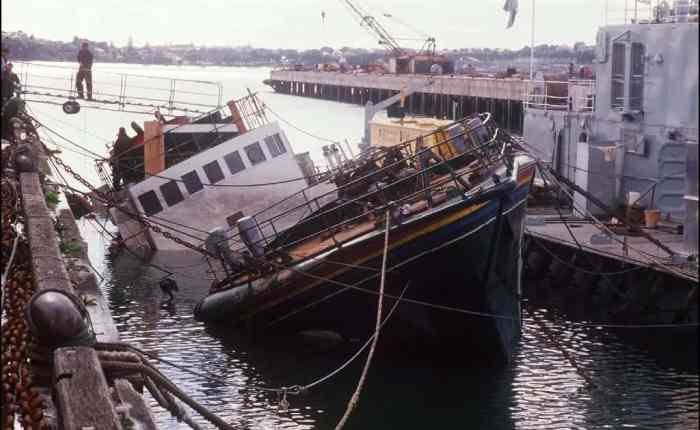
A day or two after the bombing of the Greenpeace vessel Rainbow Warrior 40 years ago on 10 July 1985, I was asked to join the police investigation team to “help with exhibits”. I was a young uniformed constable and had been noticed by someone up high as I had been fortunate enough to do 3 or 4 months of “CIB Secondment”, swapping duties with a seasoned detective (who was unimpressed as I recall). During that secondment period I’d worked on the Auckland enquiries of the Wellington Trades Hall Bombing, a crime unsolved to this day (I hope it wasn’t my fault!).
I took the grand title of 2 i/c exhibits and regarded myself then (and now) as the most junior member of the 66 strong investigation team on the Rainbow Warrior investigation. Bits of sodden objects from the ship and pieces of the its hull were catalogued, labelled and logged into the Whanganui Computer’s exhibits system. All green and grey screens and moving between tabs like a 1980s game of Loadrunner. Using a computer system to log exhibits was very new, in fact it was only the second time the module had been used. We took possession of the Zodiac boat, diving tanks, and dozens of receipts for daily living found in the campervan along with hundreds of other items. Giant drying machines operated 24/7 to dry out the sea soaked items.
Somehow, when the exhibits stopped coming in and didn’t require much attention, I got to stay on with the much smaller investigation team while we refined the evidence readying it for trial, closing loose ends. I completed a tour of Northland, logging the spots in the Kaipara Harbour and further north to identify where the two agents had travelled to and taken photographs that were found in the campervan. I was fortunate to be able to board and view the ship while it was in dry dock at the Devonport Naval Base.
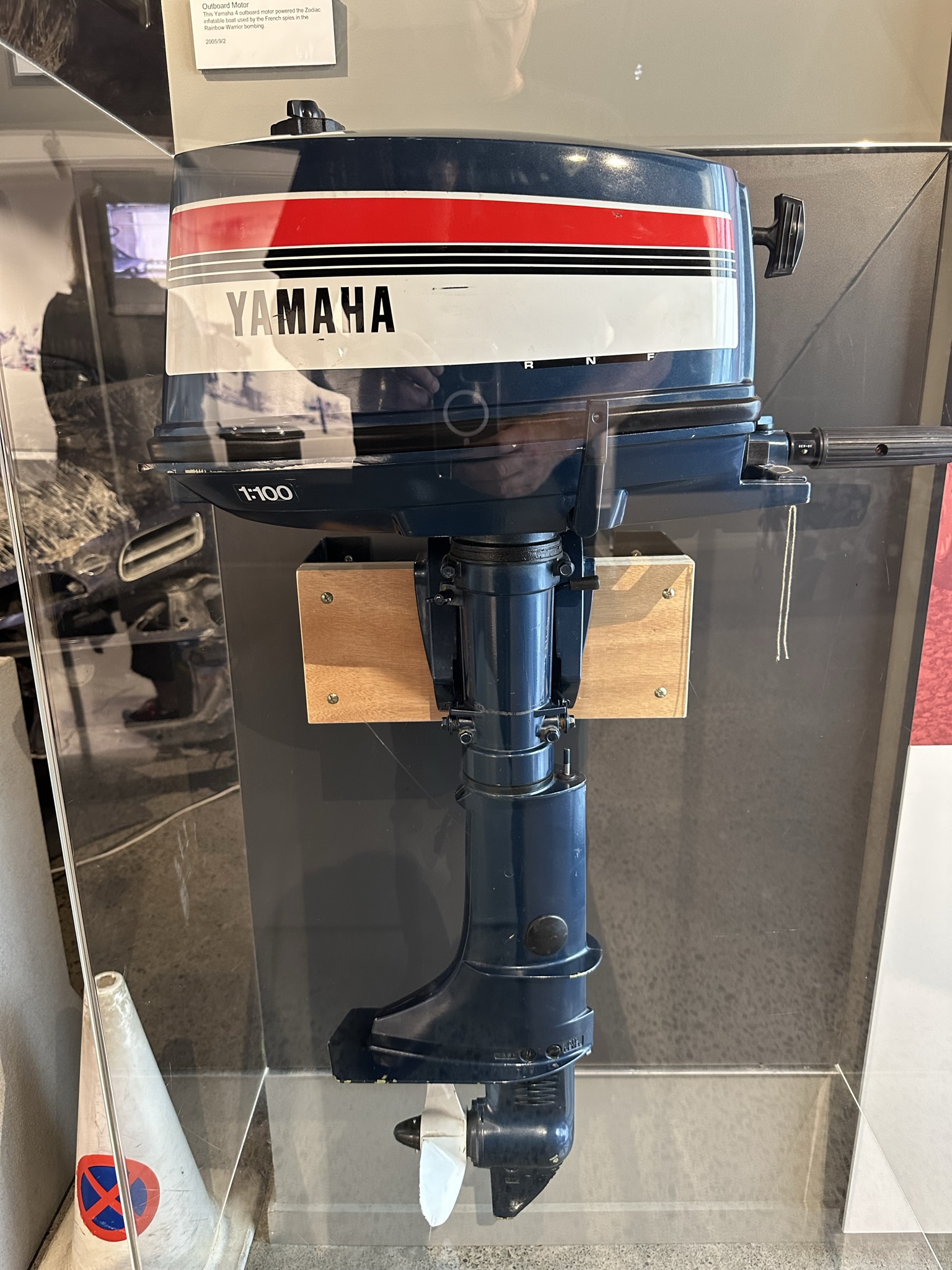
I marvelled at the diving gear, new and abandoned, and appeared on the front page of the New Zealand Herald with the outboard motor from the Zodiac. One of the final acts was going to court for the depositions hearings (to be held at the specially reopened old High Court building in Waterloo Quadrant) to discover at the same time as members of the public that a deal had been done for the two agents to plead guilty to manslaughter, the Crown withdrawing the murder charges laid.
I didn’t return to full time uniform duties. It was CIB from then on, and then Serious Fraud Office. Cops love to claim successful investigations (“that was my job” you’ll hear) and this was by no means mine, but it was a deep learning experience and shaped much of the investigation work I later and still do. How to manage exhibits, chain of evidence, looking at evidence dispassionately but considering context – only a civil servant would keep receipts like that for claiming it was said – which was correct of course, and what it means to turn over every stone.
As I read this blog back just now I realised I had gone back in time in my mind, with many of the details from this period as fresh today as they have always been. My purpose in this blog is to reflect on a period of learning that shaped me during a historical moment. But I have never forgotten that a man died – Fernando Pereira – who should have recently turned 75. I hope that those who cared about Fernando are at peace over this tragic event.
Stephen
Photos: Banner AFP Photo:Patrick Riviere, Outboard Stephen Drain
 Oh, yes, and who’s butler is this was the question. As an aside the butler Nestor in Tintin was the butler for the Bird Brothers before he was Captain Haddock’s. Blistering Barnacles!
 Stephen Drain's Leadership Blog