Traveling to Ireland to see my son Thomas and his family was a trip much delayed – almost by five years since the original planning – so it was a much anticipated. In Aotearoa we survived Covid as a community through a lot of goodwill. The rules put on us were followed because we mostly accepted them, even if sometimes we didn’t enjoy them altogether. The consensus fell away when the rest of the world connected and my perception is we’ve lived in a much more divided place. I notice it in micro moments, in traffic, in political discourse and in the unspoken interactions in everyday living.
Crazy traffic outside the hotel in Las Vegas after a four hour drive from LA, driving on the other side of the road. It turned out a concert had just come out – access to the carpark hotel was blocked and 30 minutes to navigate once around the block it was enough: “we’ll take care of it from here, you relax and check in, we’ll look after you” was the relieving narrative from the valet guys.
Rushing from the rental car drop off in the Uber to LA airport to catch the flight to London – anxious about timing: “don’t worry, we’ll get you there real quick”, and he did with help with the baggage onto the trolley too.
Heathrow is an enormous airport, one terminal seems multiples of any local airport. But my experience with four flights is one of kindness, staff checking and rechecking boarding passes for lounge access (first world issues!) and when checking an exception at security, it was warm and done with care.
The experience was repeated almost everywhere – hotel check ins, taxis, the Tube, bus drivers in London who took care to make sure they explained that the bus terminated at Hyde Park Corner – “there’s one right behind if you need to go further”.
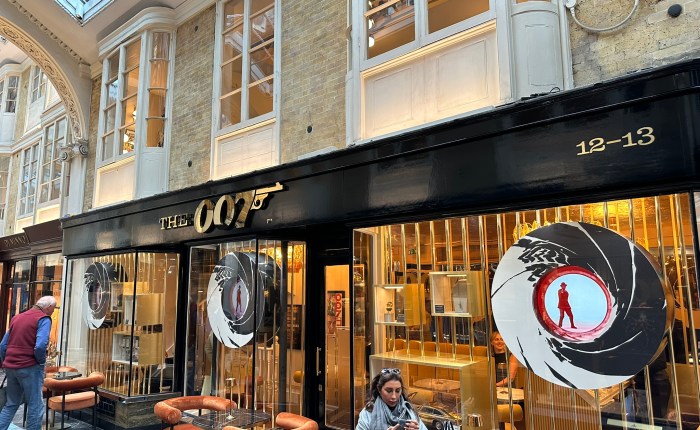
It’s the 60th anniversary of James Bond’s “Goldfinger” and the Burlington Arcade in Mayfair has been converted into a haven for Bond fans (me!) including a 007 Store run by Eon Productions – the Producer’s personal assistant during the filing of Skyfall manages the shop – and there’s a very cool bar included. Most people ordered only one drink – shaken of course.
Yes, they had commercial imperatives, but the level of engagement was extraordinary. We’re friends now!
Around the corner in Piccadilly is the jeweller Bentley & Skinner, suppliers to British monarchs since Queen Victoria and recently appointed to King Charles III. It’s also the setting of a great scene from You will meet a tall Dark Stranger and the Sales Manager chatted for ages about the filming, sharing a special moment with the stars of the film and meeting Mr Allen.
It was hard to leave to come back. I hope home is just as kind to me for the rest of the year!
Have you ever tried to have a house built to live it? Don’t! Well maybe.
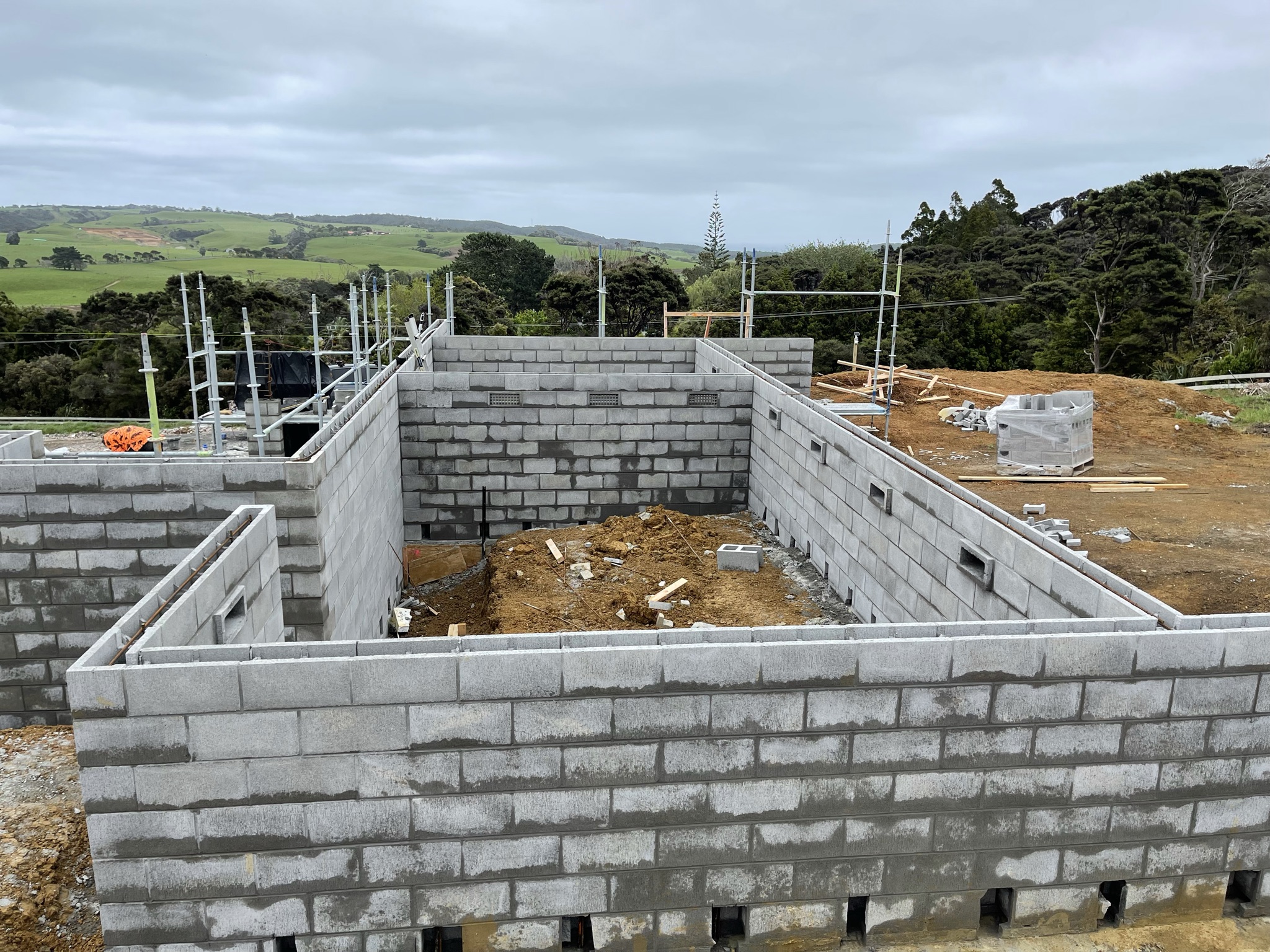
Anyway, not without some serious reflection on it. I signed up to buy my little bit of paradise in the countryside in mid-2017 and took possession in 2018. I didn’t intend to build straightaway – in fact I wanted to sell my existing home first – which I did at the end of 2019. Concept drawings were done quite early, and looking at them now, they were quite close to what I ended up with. But not before I went all Grand Designs and had an enormous house – far too big for me – designed and priced. The pricing helped to bring a dose of reality and it was back to the original drawings. Modernist, capturing the schoolhouse that once stood on the sight, and looking out to the coast in the distance. Construction started three years ago today.
Concept to drawings that are able to be priced and then get through a Consenting process was a new world for me. Aside from ensuring a guest toilet and laundry were included not much changed in the concept to the ultimate design. Have you heard that Council is quite particular in granting consent? I had, but actually, my experience was that they are rules-based and when the drawings didn’t meet the rules, they pointed it out. That took ages. Pricing was challenging but eventually I was introduced to a project manager who had found a good builder – well sort of – he was actually a project manager himself, but on inspecting his other efforts and speaking to a client he got the tick. Most important thing I did at this stage? Had the contract reviewed by a deals person. Saved me a lot of grief (and money), but more on that later.
In amongst this I grew a tumour in my leg so things got put on hold for a bit. Everyone expressed sympathy (unlucky bugger they thought!) and committed to see the thing through, especially in my limping, crutches state. But the tumour provided clarity: if not now, when?
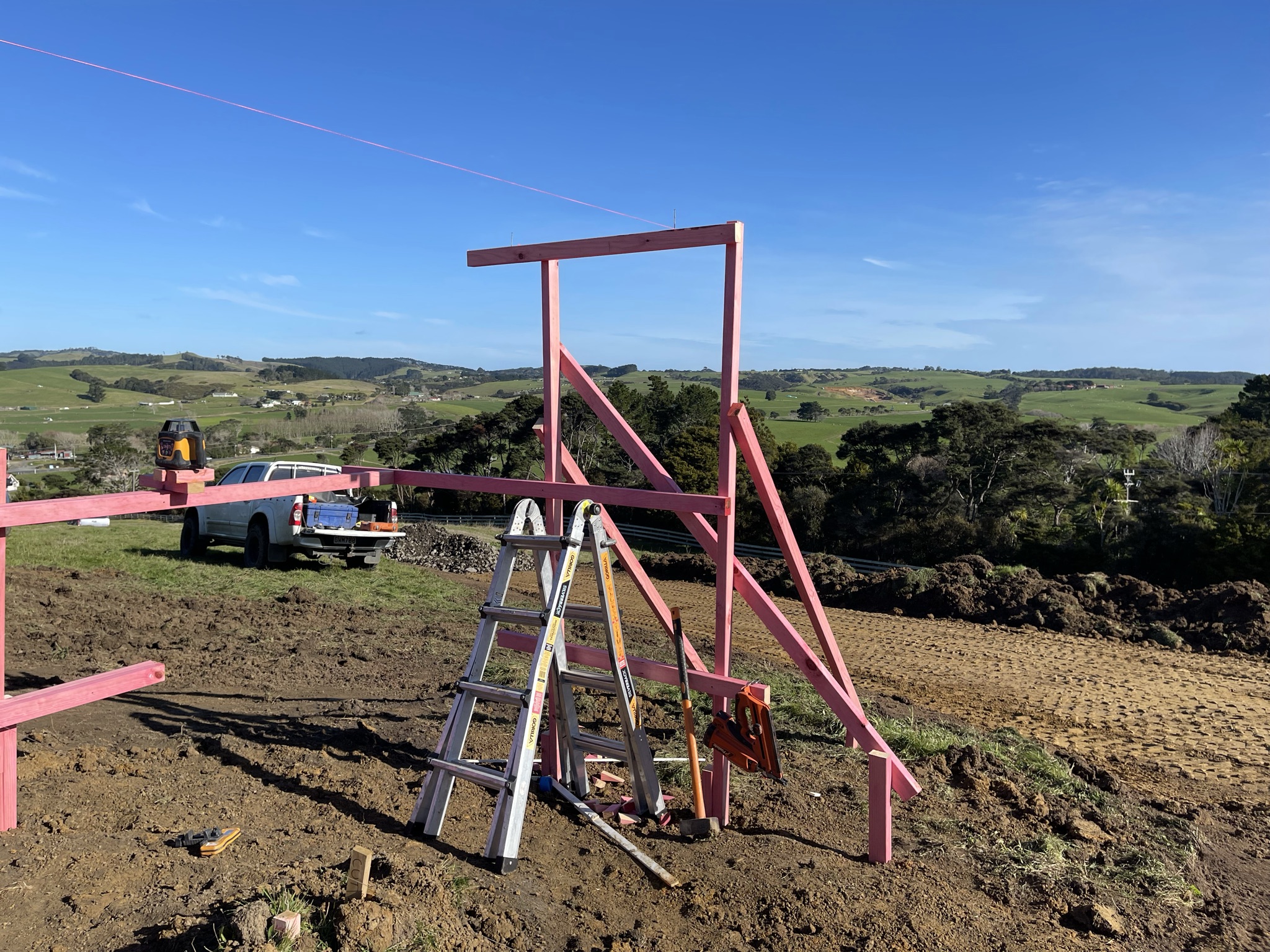
A building consent was issued. I was still hobbling a bit, but it was up to the land and sit around it for an afternoon, with some pegs and rope to actually look at the position. It didn’t feel right. And it wasn’t. Looking back at the original drawing and a penned outline I’d done on a scrap of paper using my phone compass the building had been swivelled away from the view. Not sure even now how that happened. But it did and it meant a new building consent and waiting until two weeks before the Auckland lockdown of August 2021 to start. Of course no one knew that the six week lockdown was coming, but it was a justifiable excuse for not meeting the December 2021 deadline for practical completion.
Small detail – you should have a ground survey done before building, especially on a hill. Stepping out from the veranda onto ground level pavers turned out to be a two metre drop. More plans and an expensive deck.
If you don’t want to lose money if it all goes wrong, don’t let the builder claim for construction items not on site. If you do, you’re their banker and holding a lot of risk. The value of that contract review can’t be understated. On the only two occasions I relented and permitted payment for items off-site, it went wrong, but fortunately it was at a stage where it didn’t have significant financial implications. First time were the windows – I agreed to pay the 50% deposit for their manufacture on the basis that I could take them over if there was an insolvency event. However, after payment was made the builder didn’t order them at all, rather they held the deposit and in the end the delay caused many other delays – timing is everything and something project managers know – or should know. The second time was a payment for electronics I had selected from a supplier. Fully paid to the builder, so they could be picked up. Eight weeks later the ominous email “Hi Stephen, are you actually wanting this gear, we’ve not received payment”. An administrative error I was told.
More detailed design was required on the way for various enhancements and clarifications.
Quite a few things got forgotten – a handrail for the stairs – even the Council Inspector missed it, but Mum didn’t on her first visit! Drainage according to plans, and plans with drainage that grappled with the actual land levels. Getting a building consent for the large deck! And weird stuff happened – some guttering came off during Cyclone Gabrielle and it was quickly established that it was due to the wrong clips. Builder’s response: “The shop said they’d be ok!” and “Claim insurance”.
Some things were a more sinister – subcontractors asking me to be paid. Ouch. A review of claims and payments over the first 6 or 7 months (by which time it was supposed to be long finished), uncovered errors in the claims meaning I had paid $40k more than I should have. More administrative errors.
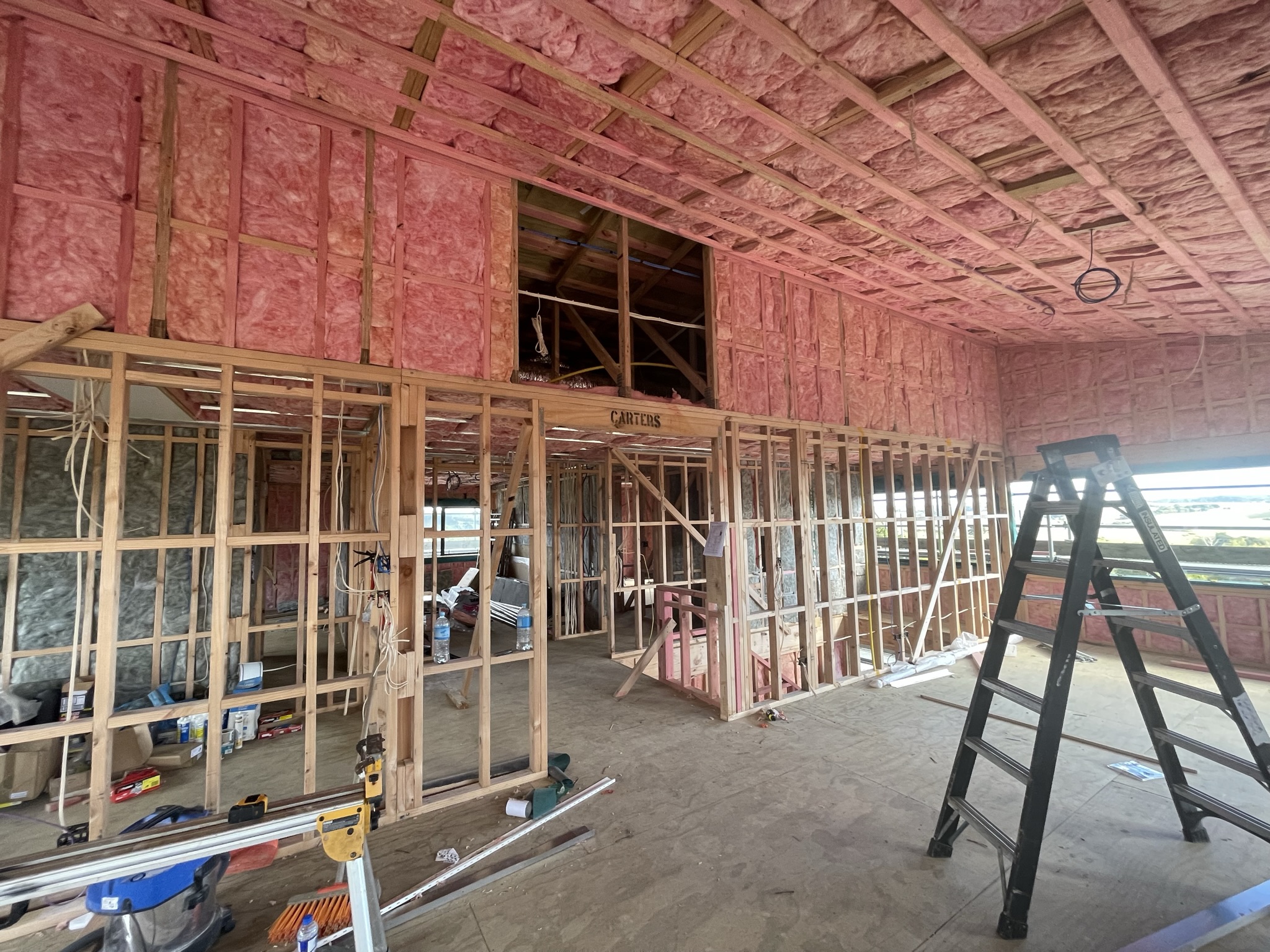
Practical completion in November 2022, which was really “non-completion but here’s a form”, was pushed through to enable me to use the new house for a special birthday celebration. A couple of weeks later I had to bail to allow scaffolding to be installed in the entrance way so painting could be completed.
At the three year mark today since the commencement of construction it’s almost done. I’ve been living there off and on and two projects remain – a small capping on top of an external wall, and my gate entrance way, both underway this month (I hope).
There’s been some nastiness too. After the Cyclone Gabrielle damage, completion stalled, and the implications that subcontractors hadn’t been paid started to play out. I was said to be the cause of that. One went bust and I’ve had to redo some substantial works as a result, and the builder went into liquidation too. There’s been letters demanding additional payments and replies that have carefully explained the reality, but I still exist in “will they have a crack again” zone.
I just finished Sam Neil’s autobiography Did I ever tell you this?, written during his cancer treatment and he expresses the satisfaction of building something special, that’s there for good. I get that, and despite it all, I’m really happy I did it, and dare I say it, I’d do it again. Seems a waste of experience to not use it!
Stephen
*Skyfall reflects the view out over the Tasman, especially at sunset. And I’m a big James Bond fan!
I’ve been grappling a bit over the last couple of years with resilience – the concepts more than the actual thing (I think!). People talk of building it up, focussing on your wellbeing to make sure you are resilient, especially during this Covid era when uncertainty about work, health, travel, whanau is ever present. It’ll be coming up four years soon since I saw my eldest son, now settled in Ireland with children of his own, one I’ve not seen in person. There are thousands of similar, and far more challenging situations for many Kiwis. I’m thinking especially those who have lost their employment or had their earnings restricted from business, or who haven’t been able to say farewell to loved ones who have died. It’s tough. And resilience is needed.
I was out at my little piece of paradise this long Waitangi weekend, doing some cleaning up, after a big clean up – moving bits of old metal, some electric power line fittings – trees in pots that had fallen over and so on. I’ve been very cautious – one of my legs is not what it used to be and I’ve been looking after my resilience by protecting it, having others to do the hard graft, leaving me for such strenuous activities as watering and fetching cold drinks from the fridge in the container (should you leave it on? – I hope it’s alright!).
Something switched – maybe I suddenly reached a tipping point and got tougher, but I grabbed all the old metal, electrical fittings and some bits of timber and lugged them up the hill to the bin. Cripes it felt good. Then I did it again. Then I moved the plants back upright. Then I attacked the door to the bore shed that’s been jamming – fixed that.
I’m certain it wasn’t all in my head, I have been weaker, but it had got in my head and now it’s out and I’m free and strong to do what I can. Well that’s what it feels like – probably won’t make the Olympic team quite yet, but you get the drift!
Mount Taranaki
In The Mental Toughness Handbook by Damon Zahariades he separates resilience from mental toughness. He says Resilience:
“is the ability to bounce back from unforeseen complications. It’s the ability to adapt. For example, suppose you leave your home at a normal time en route to your workplace. Unfortunately, you run into expectedly heavy traffic on the freeway. This setback is sure to make you late for a meeting scheduled that morning. A resilient person might grit his teeth and curse under his breath, but he’d ultimately adapt to this circumstance. He might seek a different route to his workplace, using his phone’s GPS feature. Or he may call his office and reschedule the meeting. Or he might compose an explanation for his tardiness that allows him to avoid others’ disapproval.
Mental toughness is a mindset. It not only reflects our ability to bounce back from unforeseen complications, but also demonstrates a positive outlook during the experience. It’s not just the ability to handle stressful situations. It reflects how we handle them. For example, a mentally tough person caught in unexpectedly heavy traffic might take the opportunity to listen to an inspiring audiobook. In fact, she might be pleased with her circumstance because it gives her the opportunity.”
Obviously there’s more to it in the book than I can relay here, but think about the times when things go wrong – do you see it as an opportunity? Or do you try and make sure the tracks are covered?
I’m not advocating pulling yourself up by the bootstrings necessarily but there is something to be said for thinking of the opportunity. But it’s tough. Mentally tough, but it might just be in your head as to which way you choose.
A team member said the other day that we know how long we’d been in lockdown because my blog posts have a running tally. Well they did during the first lockdown in 2020 and the last time I totalled it was 19 August when it was 510 days since the start of the first lockdown. If you’re interested it’s 628 days today. And if you live to the average age of a Kiwi that’s over two percent of your life since we started this lockdown and restriction journey. So what?
Well whatever happens, I’m well past the waiting for life to return to how it was – there is no return – this is it. Get on with it. Which means getting vaccinated, including a booster soon, embracing how we work, which for the knowledge worker, will have some level of flexibility. A combination of in the office, working at home, working away from home (if you’re fortunate enough to have other options), and working when it suits. And it means not bothering if you can’t do one or the other, just working how you can, or as the case may be, how you have to.
Going back to the office for the last week felt like light relief – I counted only six people on my “home floor” of level 29 on Monday – so it was very light. In fairness Monday was not of my business unit’s “designated days” as was prescribed at the commencement of the week – soon gone with new government rules – but it quickly swelled by Thursday to feel a bit more challenging to find a space. There was lots of “isn’t it great to be back in the office” and “so pleased to be out of the house“. I’m not sure what to make of this yet – will this be the refrain on 17 January when we start back after the holidays?!
There’s a switch taking place – people are tired from lockdown work – I’m tired from staring at the screen too much, but I don’t think we will, or will even want to, go back to “9-5” in the office five days a week. Of course the switch started long before Covid-19, but it’s accelerated beyond all the change plans, carefully thought through, could have anticipated. When I look back at our flexible working plans before “Day 1”, an educated guess might be that it would have been at least 2025 before we got to where we are now.
The future of motoring has arrived – here’s a fully electric Polestar 2 EV
So, the future may have arrived. For once! All my life I’ve looked forward to the future and when it’s arrived, most of the time it was so gradual I never noticed it. Even the internet seemed cautious, transitional, and obvious, when it arrived. And we’re still waiting on flying cars (they were supposed to be here long ago!), and robots are generally confined to places where we don’t see them (I hope).
On reflection, my counting the days of the lockdown was partly to tick off the days before we got out of it. “It” turned out to be the switch to flexibility we had been seeking. Although it was for reasons we wouldn’t wish for, we can look at the day numbers now and say with some degree of confidence that it’s day 628 since the future of flexible working arrived for certain.
Stephen
p.s EVs and space tourism are here too – my paternal grandmother was born this day in 1902, in Lilydale, Tasmania. I wonder what she would make of all of this – having lived through the Spanish Flu and two world wars? I reckon she’d take it in her stride with a chuckle and be grateful at least something was happening! And she’d be up for an EV and a trip to space for certain. She loved an adventure.





 Stephen Drain's Leadership Blog