But

I like what you said, but say this next time. I really liked the way you did this, but in future could you watch out for that. This has been a great day, but if only it didn’t rain. I loved that movie, but it was a shame that it finished so early.

Does but have a place in your leadership conversation? Do you notice the but in language around you? Maybe you’re a but person.

Giving empowering feedback, being positive when you can be are really important parts of growing leaders. Following it up with an empowering message about how to take the next step to grow even more is encouraging and a coaching opportunity to grab hold of when you can.

Adding a but after the encouragement is negative and makes the next part of the conversation sound like the real reason for the conversation. Which it probably is if you’re a but person.

And don’t think you can simply change but for however! I won’t let you off the hook and neither will the person receiving the feedback.

A short blog about a short word.

Watch out for it – if but is coming out when you could be empowering, ask yourself – what am I trying to do here?

I’d say it’ll say more about you than the other person.

No ifs or buts about it! (sorry had to do that)

Stephen
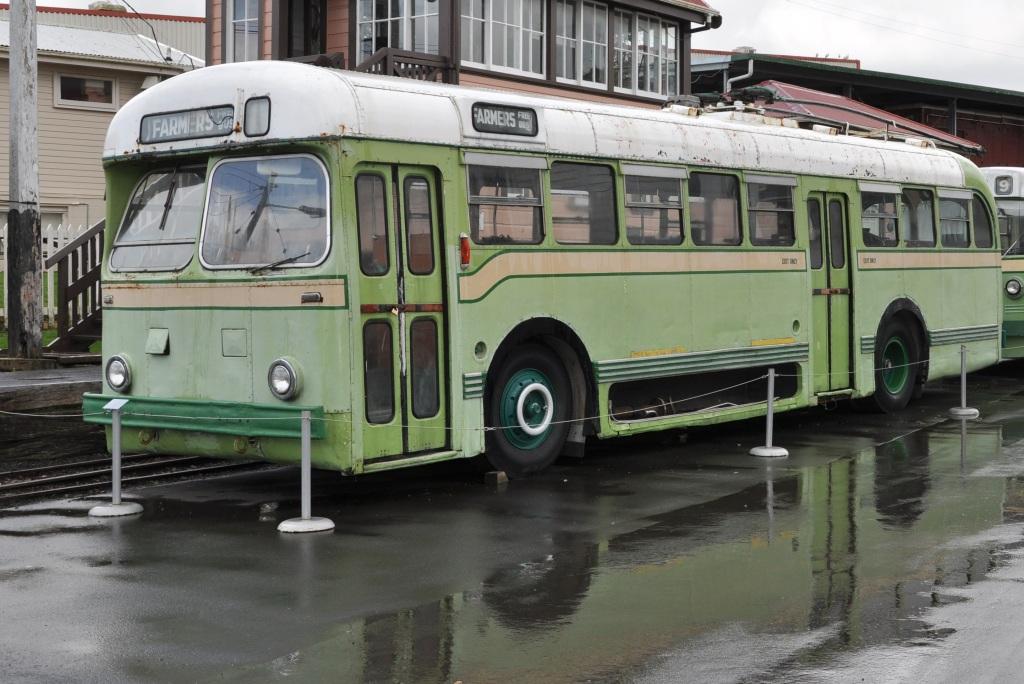
Really glad you took our talk about getting on the bus to heart and next time we could even try to get the strategy going without buying a bus

Need a holiday already?

I stopped on the footbridge over the Southern Motorway near the Newmarket Viaduct on my run yesterday, mainly to look at the construction of the new viaduct. It’s a fascinating project and as I gazed over the motorway I found myself mesmerised by the lanes of traffic speeding towards and under me. Feeling slightly dizzy I continued on my way. The run took me past six Auckland Volcanoes – Three Kings, Maungakiekie in One Tree Hill Domain, Te Kopuke (Mt St John), Remuera (Mt Hobson), Pukekawa (Domain) and Maungawhau (Mt Eden). On a more energetic day I have run up the peaks, but this run was about a steady undulating run.

I lot of people I know are feeling fatigued already having been back at work for less than two months. Increasing expectations on us all, limited resources, a recession, a terrible disaster in Christchurch are some of the things that might be contributing to this. I’ve noticed I haven’t been to as many movies as I would like to recently – there doesn’t seem to be time.

Always in a hurry. Busy people filling their resting time with activities (like running!), so not finding the time to be present with ourselves, reflect and recharge

And those we’re leading: are we putting the same expectations on them? Or maybe we’re holding onto stuff that could be delegated because we want it done, well, our way!

At the end of my run I took a diversion to pass my former maternal grandparents home. Having been at a cousins get-together the day before it seemed like the right thing to do. Grandma’s house seemed peaceful and inviting even now. A place where as a little boy I could sleep on the couch overnight. A peaceful oasis so close to the scene of so many volcanic eruptions.

I’m going to the movies this week. I’ll find something reflective, happy or even just funny. A holiday evening in the week.

Stephen

Consumed by a role

If you work in a large organisation as I do you might experience from time to time, this thing, sometimes referred to as bureaucracy. I quite like the word bureau, sounds like a solid agency, slightly upmarket who know what they do. Add a misspelt crazy on the end of it and you have a range of behaviours and stories that can form the basis of leadership stories for workshops from here to infinity!

We all get consumed in our own little worlds from time to time, especially when the pressure comes on from the crazy bureau.

I’ve been doing quite a bit of motorway driving lately (aka freeway – see I’m not consumed only in my little world!) and noticed lots of drivers who, especially during mid to late morning when you can briefly drive at the speed limit, enter the motorway and as quickly as they can, but driving quite slowly, more over to the ‘fast’ lane, and stubbornly proceed without any regard to others. What can you do? Flash the lights? Tailgate? Pass on the inside? Breath out and relax? Yes, all of those things. But I’ve started the great role modelling experiment: When I can, no matter whether there’s anyone behind me or not, I move over. That probably sounds obvious if you’re in  Australia or US reading this, but it’s not here in NZ. And I’ve monitored the behaviour of other vehicles, compared to the other techniques. I reckon one in three react to the traditional methods. Two out of three mimic my driving, if I deliberately pull over when I don’t need to.

It’s very easy in the crazy bureau to be consumed by your role and you’ll see it in the language:  “We need to know this for our records” or “You’ll have to fill in this form – we can’t process the claim without that particular form filled in”. I don’t mind admitting I don’t react well to such nonsense. Maybe I’m not suited to the crazy bureau.

But I do know that if we all role model the behaviours we expect of others, it might not always work or have immediate effect, but like the motorway, it’s a start.

Consumed by your role, or a role model?

Stephen

What’s your story?

We have a story telling session this week which has kind of grabbed my attention in unexpected ways. Part of me thinks there’s lot to give out, and part of me thinks, it’s well, just what we do.

When I was out running this evening we talked about the Life in a Day movie project released at the Sundance Film Festival last month. One of our group wants to photograph some

Where does your story start?

of the hills we run on in the Waitakeres: “tell her about your video with Frosty on Scenic Drive” and so the brief story of a foggy but mild Saturday run last July where I filmed part of my contribution to Life in a Day began. and kept us going for a part of our run.

If you’re a regular reader here (remember to subscribe for free to this blog by next Tuesday 1 March and go into the draw to win a book of my choosing!), and even if you’re not, you’ll know that some of the important things we notice in our leaders are authenticity, telling the truth, being vulnerable, mindfulness, being present and vision.

I’ve been doing some reading about story telling (is that one word or two?) and I initially thought that we could use story telling as a valuable part of the leader’s toolbox. But then as I kept reading, deeper insights developed.

Filmmaker Peter Guber (Rain Man, Batman, The Color Purple, Midnight Express) describes four truths of the Story teller:

  • Truth to the teller – authenticity and vulnerablity of the story teller is a critical component of the story.
  • Truth to the audience – once aroused, the audience’s expectations must be fulfilled.
  • Truth to the moment – no story is told the same, the storyteller responds to the context at that moment.
  • Truth to the mission – the story teller is committed to a vision beyond themselves.

So is it a good idea to learn some story telling techniques as a leader? Maybe it is. But I reckon we’ll find out at our story telling session that we’ll go deeper than learning about story telling. We’ll start with our own autheniticity and vulnerability to grow to yet another level. And those around us will say we’re great leaders. They’ll notice we are authentic and vulnerable and have a vision – they’ll hear it in the story.  And no wonder I love the movies. We all have a story. What’s yours?

Stephen