Seeing through the fog

There’s been a bit of fog around the super city recently and getting around has been super slow. On a day trip to Hamilton (I was mocked for referring to the journey as a “road trip” but hell, we got above 40 km/h) it was a beautiful clear day with the fog residing above the Bombays for once!

This morning I was on the 28th floor of a city building with a spectacular view out over the city, the harbour, the port, the tank farm and beyond.  My host perhaps didn’t realise it but is was just the medicine I needed after a fortnight of niggles about stuff that didn’t matter in the long term (as it turned out) – a builder who can’t complete a job, a communications company that simply can’t understand my minor an easily fixable grievance and my monthly favourite – the cashflow!

We often hear about taking a strategic view, rising above the detail and getting a perspective.  Life has felt a bit foggy this week but today has brought some clarity.  The builder has committed for next week, the communications company saw sense and I understood my cashflow.  On Tuesday I encountered someone wearing a Hamil-tron “city of the future” T-shirt. Maybe it is – when the fog clears the future is clear.

And Hamilton is certainly on my side today – thanks to the good folk there, this blog has recorded the highest number of hits ever today (and it’s only 1.00pm!).

What is your fog today?  Could you clear it and take the long view?

Have a great weekend everyone.

Stephen

People come first

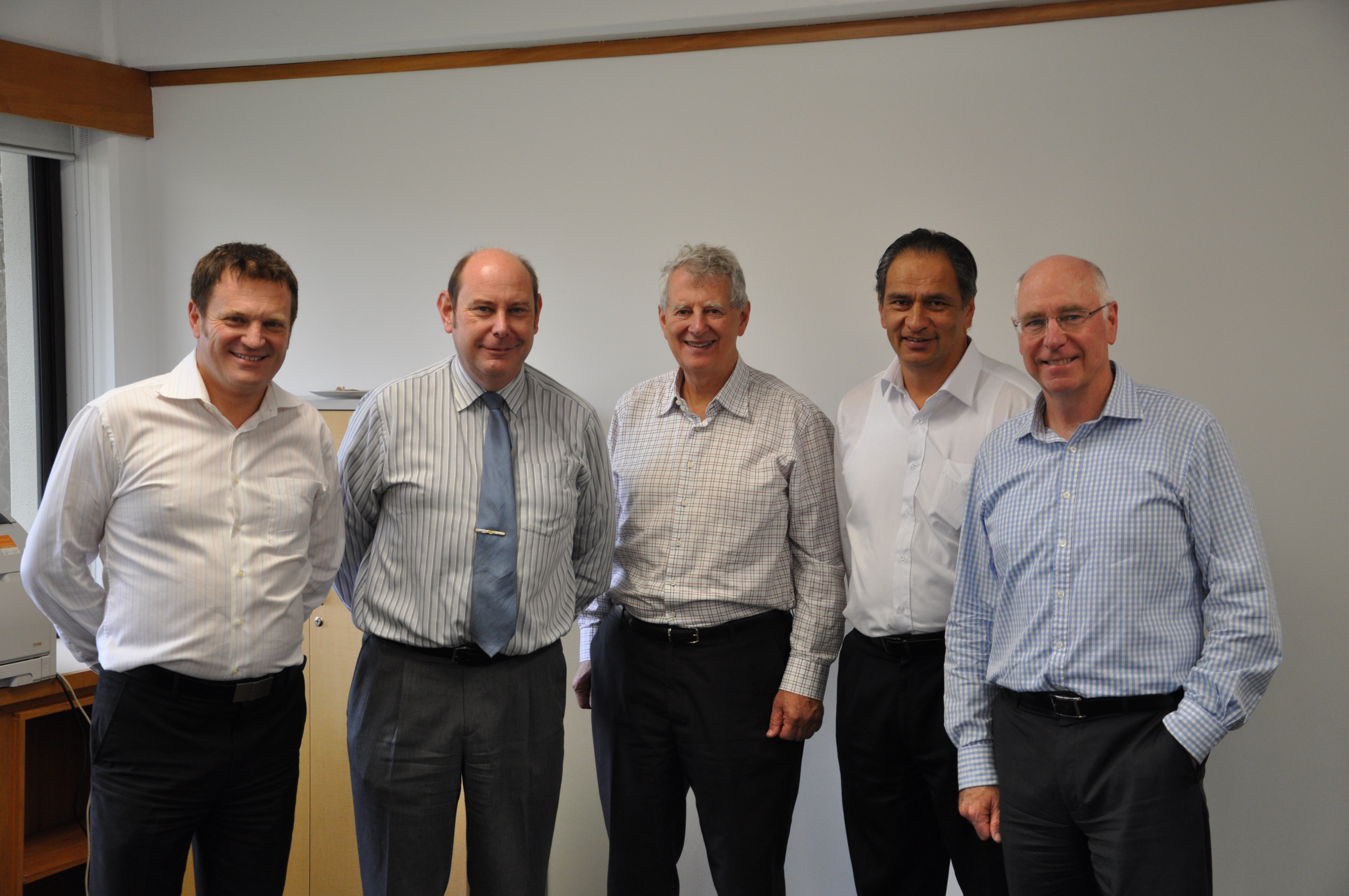
Stephen Tindall visited us today. Talking to him I noticed a man who was both interesting and interested.

Stephen Drain, Jonathan Kirkpatrick, Alastair MacCormick, Kevin Pryor and Sir Stephen Tindall

He took the time to engage one-on-one with all of those present seeking to understand their businesses and aspirations.

Naturally, we were pleased to engage and spoke about our leadership development and focus on authenticity. That The Warehouse

are clients and Stephen Tindall is a graduate of AUT were added bonuses and he promised to read our materials.  Thank you.

Speaking to the wider group he said that when considering new companies for his investment company K1W1 to invest in, he looks at three aspects:

  • People
  • Technology
  • IP

In that order. People come first.

Not surprising for a great leader to think that.

After he had gone I expressed light-hearted disappointment to my team that no-one had addressed his as Sir Stephen, as he is. “Oh that’s right!”, declared Raewyn. Then we realised. This leader didn’t need a title. It was obvious.

Stephen

ps I did reassure the team that if they felt the need to say the sir before Stephen for the afternoon, then go for. After all, I don’t mind being interrupted.

Defensive Force

Watching Seinfeld tonight Elaine was bemoaning the fact that she wasn’t seen as responsible enough to babysit a friend’s child. “Who wants to be responsible” responded Jerry Seinfeld “Whenever anything goes wrong the first thing they ask is who is responsible”.

It’s a question that has exercised the mind of the auditor general:  why did four Defence Force officers falsely claim allowances while on secondment to the UN. Listening to interviews on the radio on the way to my run this evening I heard “they’ve been disciplined”, “won’t happen again” and “they only claimed what they were entitled to remember” several times. What I didn’t hear was mention of culture and values that the auditor general had identified as underlying causes of the falsities.

At times of crisis, the leaders of any organisation will need to adopt a command and control leadership style, where directions are given and acted upon without question. The Defence business while on operations surely fits into this camp. But what about the rest of the time? Can the culture switch as required or is there just one culture?

We get glimpses of  an organisation’s culture through stuff that pops out externally – staff retention, how problems are dealt with, choices people make about where to work and statements from leaders are the sorts of things where we can pick up clues. So when its said that the culture and values caused the environment that gave rise to the false claims what culture are we talking about? Is this the culture that requires obedience to superior officers in all circumstances, even when illegal?

On the one hand you need to have officers able to unquestioningly respond to orders. But outside of operations you need to have a culture that allows questioning, coaching and responsibility for ones own actions. Sounds like a big challenge.

So when I listened to the radio tonight I heard all the things that one might expect with the organisation top-down rule book approach to “make things happen”.  “I will ensure that it doesn’t happen again”. That’s a fine aim, but you won’t if you don’t change the culture. And you won’t change the culture by doing treating the problem with the same culture that caused it. That dreadful defensiveness that uses rules and structures to avoid the potential embarrassment of having to explore the root causes that the auditor general identified.

So who is responsible? Is that even the right question? I believe that in leadership discovery we need to start with self. You won’t be acting without integrity and blind unquestioning if you’re authentic. But if your leadership paridigm is about finding new ways to control and strategise then you’re not even scratching the surface – you’re still on the command and control, but with fancy words.

Leadership discovery of authenticity. It’s the best defence against a culture that is not right, and the most sustainable way to embed real change.

That’s got a lot of force to it I reckon.

Stephen

Have the cops been raiding the bank?

It’s almost a year since  I first wrote on this blog. My second blog was about our trust bank which got me thinking yesterday about my home town.  There’s been a lot of trouble down there in Christchurch lately. Boy Racers are winding everyone up, there’s been quite a few hold-ups and yesterday two police officers were shot.  Fortunately they survived, but not so the police dog Gage. There’s an increasing awareness that quite a lot of crime is directed at police.

The police commissioner Howard Broad has now said that he’s going to make guns more accessible to the police. There’s new laws being introduced to make it a more serious offence to assault a police officer. They have stun guns. We’re building lots of prison cells to keep people temporarily away from us (99% are coming out one day to a neighbourhood near you). We’re told by the police union that the police will need to get tougher as society is not showing the respect that is due.

When I put this all together I’m disturbed. I’m mostly disturbed by the proposition that a lack of respect is a problem that is only has one side to it. In coaching, I often say to my coachees that there is only one person you can truly change and the best place to start is with that person.

Over Queen’s Birthday weekend we were told that the police were going all out to slow us down and that patrols were going to be out in force, which in fact, they appeared to be. Only one person died on the roads that weekend. Subsequent (shorter weekends) have not been so flash. It turned out that many of the police cars parked up apparently to get the speeding public were empty. It was a con.

The tone and content of police communication to those it serves has become increasingly lecturing and telling. Anyone with a modicum of leadership understanding will know the impact of such behaviour on a team. And importantly, what deposits are being made in the trust bank with the public by the police from its minister down, to us public? The solutions appear reminiscent of bronze-age “eye for an eye” thinking, rather than addressing underlying issues.

I am certain and know that individual police officer’s efforts are in many respects outstanding. Ask any country cop about his or her relationship with the community and you will soon find that trust, goodwill and working together are ingredients that are not just advantageous, but essential, for getting the job done with the community. The trust bank has healthy deposits.

Should we expect our police and our government to look inside and explore their behaviour? Would some deep reflection about trust benefit? What about other stuff outside the realm of policing that actually causes crime? I reckon it would. I’m realistic of course and know that the man who shot the cops yesterday will and should get what he deserves (including a shave!). But if personal leadership requires trust, then so does organisational leadership and if it’s not led by the police, we won’t be solving anything.

Should the police and its masters do more about making some deposits into the trust bank with us? It’s easy and simple to think that the police aren’t responsible for crime, they’re only responsible for picking up the mess that criminals create. Even if that’s the case, I think we can fairly and squarely say that what we’re doing with tougher, bronze-age solutions, just ain’t working.

I reckon as well as being tough, we need to see some deposits in the trust bank. Empty police cars, crooked cops and lecturing to us has raided the bank. Before we need shotguns in the front of patrol cars, let’s see some real leadership. Some self reflection and building of trust with the community. Afterall, we’re all one. The police are ours, for us.

Does your organisation have a trust bank with its community?