Going back in time with a prince

There were sixty of us teenagers, 17-18 years old, apparently selected from a pool of 1000 applicants to be members of what was to be HRH Prince of Wales 25th Cadet Wing of police trainees. I don’t recall in advance knowing that our patron was to be the the Prince of Wales or, as it happens, that this was the penultimate police cadet wing, a programme designed to take school leavers directly into a year of police training. “Last week you couldn’t spell Contsatble and now you are one!“, the more mature recruits reminded us on a banner.

The prince had a stand up lunch with us during his visit that year, at which time he officially opened the new police college – later designated “Royal” during a visit by his mother the Queen. The only thing I really recall during the lunch was the prince asking us if we smoked cannabis – I can’t recall how the conversation got there – but it was an odd question to ask police trainees. I can’t imagine his mother asking such a question, but maybe it was a reflection of being a leader in waiting vs holding the ultimate position.

Twice the Queen drove past our family home in Christchurch, from her yacht in Lyttelton Harbour to the central city. Like dutiful subjects, we waited on the avenue, the road deserted, looking for the arrival of the motorcade, with various police and other very shiny vehicles leading, and ultimately the vehicle without licence plates – transporting a queen and her husband, on full show. On one occasion we were certain that she waved directly at us.

It’s only very recently that I thought about us having the future king as our wing patron – apparently the only time it was granted – there is no Prince of Wales “wing” of police or military trainees anywhere else. Although it’s not completely clear what our patron was supposed to do, but lending his name to our cadet wing seemed to be the main thing, and, according to publicly available information, “providing support and guidance”. As trainee police constables, what was to be important was service – to our community – although it would be fair to say that driving lessons, physical training, and marching were probably more front of mind at the police college that year.

I noticed that much of the talk at memorial services for the Queen these last two weeks was about her service too. Her service to the Commonwealth, the countries of her Realm, including New Zealand and to the United Kingdom. Growing up and watching from afar, that service appeared replete with beautiful homes & estates, motor vehicles, the bestest outfits and, for some reason, picnics.

But despite that privilege, there is little doubt that the Queen has been a symbol of stability, if somewhat remote and obscure to almost all of us. She never really appeared to take it easy, shirked from duty unless she was too unwell, or simply retired. They were not options she gave herself.

Maybe I don’t fully understand it all, but the memorial services with their juxtaposition of military, church and state feels somewhat confronting. Not to mention “God save the King!” being sung in New Zealand, like it was completely normal and 1937. But with that stage-managed backdrop I think we can expect King Charles to reign over us for the foreseeable future. Like his mother, he can be expected to serve, providing in a mysterious way a level of stability and continuity that many people take comfort from. A form of servant leadership. With castles!

And long may the experiences of the King Charles III cadet wing live on in the 60 teenagers who helped me grow up all those years ago.

Stephen

Of the 60 police cadets who started, seven are still serving in the NZ Police, and several are sadly not with us. We’re having our (Covid) delayed 40th reunion early next year. In July 2016 a number of serving police members from our cadet wing had their 35 year service medals presented to them by the future king in London.

Feedback Season

Feedback Season

For many organisations including mine, it’s “year end” at 30 June, meaning lots of work to close out financial performance measures and work out how well we did as humans. Assessments are made against goals – how did you get away with that for an objective?! – and we try as best as we can to assess behaviours on leadership and teaming for the year just past.

It’s serious business. Countless research and anecdotes tell us people are more likely to leave their workplace because of their boss, not the work, or even the rewards. Leadership has a massive impact on performance, wellbeing, and the one measure most precious to me, happiness.

I don’t recall anyone saying to me – hate work, the boss is a prick, but I’m as happy as can be. Of course, happiness must just be my thing and satisfaction, professional reward, or contentment might be better descriptors for you. In fact I’ve had my happiness both challenged (it’s potentially superficial) – and reaffirmed (deeper happiness), at the same time by some recent reading on Stoicism. Stoicism considers that happiness can be found through virtue, the four main types of which are wisdom, justice, courage and moderation.

Using the Stoics virtues can guide us in feedback.

I think if we could try to give feedback that followed these Stoic principles, it would be a fairly good start for all of us. We could try giving feedback that is:

  • Given in the exercise of good judgment, experience, as a wise person would do – wisdom. Serious feedback needs serious work and is not for the faint-hearted and requires experience. It’s grown up’s work.
  • Fair and equitable according to the receiver’s experience – progressive justice. The platinum rule – treating others as they wish to be treated, not just how you think you might like to be treated.
  • Given honestly and accurately, regardless of the giver’s feeling – courage. Buckle up, this isn’t easy and it takes courage to do it, and do it right. That’s not just “telling the truth” as they can sound blunt, uncaring or abrupt.
  • Given with a sense of reason, balanced against the receiver’s overall performance and the team’s too – moderated. Moderated feedback is kind, generous and fair all at once.

Of course all is this is about supporting the giver. The receiver needs to be equally as prepared, and a wise receiver of feedback will be noticing the care and attention of the giver and playing their part – like an encouraging, nodding member of an audience – to encourage and help the giver too.

Go for it!

Stephen

ps Stoicism developed in the 3rd Century BCE and flourished in the Roman Empire

10th decade

10th decade

Aunty Rewa was born in October 1906 in the gold mining town of Waihi on the southern end of the Coromandel. Her parents William and Letitia, both Pākehā, had a Māori nanny and asked her to name the new baby. And Rewa entered the family.

When my mother was born she was named after Aunty Rewa and thanks to the original Koha and longevity, 116 years later the name still lives on in our family. I don’t know anything of the Nanny but I do know that being given the opportunity to name a new-born and carrying that through another generation are both special events and show insight that make fascinate me. Gifting a name is indeed special, a true koha.

Of course I’m biased, but Mum is pretty special and moving another year into her tenth decade this month, celebrated yesterday with a small family lunch in Ōtautahi Christchurch, was a lovely family occasion.

“Bottled Peaches!” declared the Airport security woman on the way home – actually apricots – but I didn’t feel like splitting hairs. Mum’s special creation and this jar is from her 69th annual bottling session of Otago apricots, earlier this year, never having missed making them each year since 1952 or 3.

A birthday should be about gifting and I’m pretty fortunate to have come away with this little number.

But the true gift is time – with Mum especially – and Mum still providing for us kids all these years later.

Very blessed.

Happy birthday Mum!

Stephen

Those rocks are smaller than you think

Those rocks are smaller than you think

Coming to the end of The Obstacle is the Way I was surprised when the author announced that I was now a philosopher in Stoicism. Although the title of the book is perhaps an obvious clue as to what follows, I hadn’t framed my approach this way. But I found much of the book confirmatory of the usefulness of the concepts of stoicism – especially in a world of disruption (i.e. always!).

The challenging client? Covid anxiety? A war? The intractable work issue? Passive behaviour that feels aggressive? Too many life admins outstanding? All of the above all at once? I try to monitor and notice my own reactions to life’s obstacles – does my heart rate increase, am I irritable, do I start doing detailed work and planning? To notice is to be present in the here and now.

I remember many moons ago working in the Auckland Central police watchhouse – where people who had been arrested were “processed” – until they were bailed or taken to court. As you might imagine, not all customers were particularly happy – many drunk, aggressive and abusive. But you had to search, photograph and fingerprint them, whether they liked it or not. In some respects, achieving the outcomes required behaviour that was the antithesis of the macho, forceful imagine of a uniform cop tackling an alcohol-infused melee. It required the ability to depersonalise the anger directed at you. It’s surprisingly difficult to fingerprint someone – hold their fingers over an inkpad, and roll each finger on the paper – all ten of them – if they don’t want it! I must have achieved a modicum of success as the senior sergeant asked me to stay on for a second six month tour because he said, I had the temperament. I declined, patrols were far more exciting.

But it must have been part of my journey of stoicism, which has really come to the fore these last couple of years, although I’ve never really framed it for myself that way. Perception, Action and Will make up the three disciplines of this book and underpinning it is turning every obstacle into an advantage. In business we might say “turning lemon into lemonade”, or “pivoting now”, but what we’re doing is turning the challenge, the obstacle or disadvantage into an opportunity.

Put another way, declining to be a victim despite the circumstances of apparent unfairness, avoiding catastrophising a situation – living in the present – the book says that unfortunately “We have to dive endlessly into what everything “means”, whether something is “fair” or not, whats “behind” this or that..”. Actually most of the time when something isn’t going our way, the person, or people that might be the perceived cause, are more than likely not particularly interested in us. Sad, but good too! It can put perspective into our lives.

Been “disrespected” at work? Who hasn’t been? (who hasn’t done it too?). Was the other person acting with intention? Possibly, but more than likely it was just a moment. So don’t worry. Feed off what they said and come back more powerful appearing more considered and patient as a result.

It’s a perfect day for stoicism. Rain is here after what feels like months of fine weather (unconscious bias of course – there’s been some!), and it’s got that cosy, rain on the roof feeling.

An opportunity to catch up on life admin, and even restart a blog!

Stephen

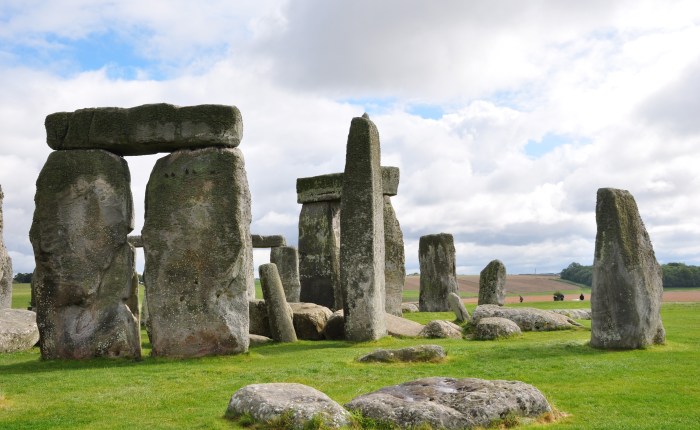
Headline Photograph: Stonehenge from a visit in 2015. The rocks were quite a bit smaller than I had imagined.