Taking responsibility for what comes your way too.
I’m back to Mum’s 85th birthday again. After a lovely lunch at Dux Dine (where Mum and Dad are regulars) we assembled in a corner of the restaurant for photographs and words. Thinking about what I was going to say to Mum I noticed she grabbed all her cards and gifts together in a neat pile and clutched them tightly.
Look after your own stuff. Make things happen for yourself. Take responsibility for your own actions and if you want something then find your own way to get it. That’s Mum.
She’s a great Mum and firm and compassionate all at once. Direct too. “About time you bought a house” she said once. She was right and I did. If only more people knew she predicted the Auckland housing market long before it was even talked about!
A fine leadership example.
I like taking responsibility for achieving something myself – they’re the best achievements you can ever have.
Stephen
ps I got a lovely thank you card after the birthday too. That was a nice surprise.
As I recall Victor was a tall and athletic boy. Like me, he lived in Linwood Ave, just up the road and we were friends from school. Unlike me he was fine rugby player. Visiting the Harris’ house after school to play was a treat – there were different toys and things to do and Mrs Harris was always pleased to see me.
In 1976 Victor started at Linwood High School along with my other good friend Nigel while I went to Shirley Boys’. On a Saturday in early March Nigel, Victor, Victor’s father and some others were up near Hanmer along the Hurunui River when a rock or similar came down and struck Victor on the head and he fell into the river.
He died at the scene.
It would have been Victor’s birthday last weekend and despite the 40 years past I still remember him on his birthday.
Life is short, but Victor’s was way too short. I remember the funeral – sitting near the back at the chapel in the Crematorium at Bromley in Linwood Ave. It seemed surreal. I was probably too young to fully understand.
I also remember visiting Mrs Harris with Mum. She seemed amazingly composed and at peace. Nigel is still in touch with the Harris’ and he tells me they are at peace about Victor.
Never underestimate the power of reflection. It’s taken me 40 years, but I’m pleased to have said something about Victor. A great friend and never forgotten.
After a month in Europe it was great to back on the bike to and from work. I don’t cycle every day, but I try for three times a week. It’s 9 kilometres give or take, half or which is on dedicated cycle lanes and half on a bus lane. Cycling on a bus lane is not for the faint-hearted, but I’ve only had good experiences with buses – it’s the cars that cross or enter the lane who create challenges.
Rush hour in Copenhagen
I had an impression that cycling in Berlin and Copenhagen would be quite special. It was. But not just for the infrastructure – I’ll come back to that shortly – but for the attitude of the residents. A cycle lane means a traffic lane for cycles that you respect as you would another lane of traffic – more so in fact because cyclists are obviously vulnerable – not a nuisance or barrier for ‘real’ traffic (as can often be the local experience). Cyclists are sensible too – not aggressive to each other or other road users – but like most traffic in Europe they move with intent. One of my sisters said that she’d be too timid to cycle on a cycle lane in Copenhagen – too busy she said – and she’s right, it is busy.
Some streets are just made for cycling
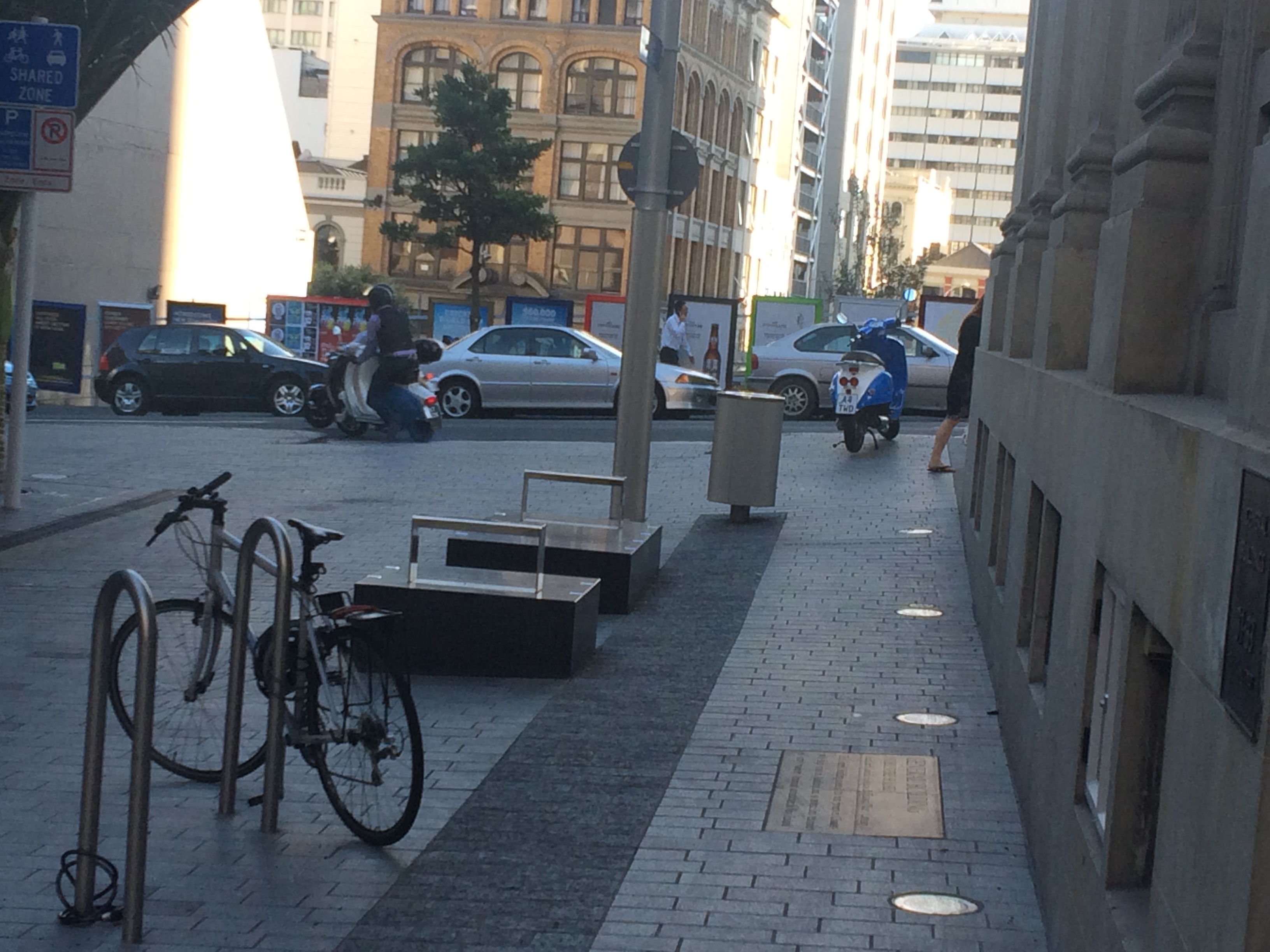
I found it invigorating to be cycling with so many like-minded people. And it’s not just the hardy or lycra- wearing (of which there were very little). But parents picking up their children after day care, business people commuting and Seniors getting around doing their shopping. Many apartments appeared not to have car parks in Copenhagen, but there were lots of cycles parked everywhere. A different normal.
Auckland has much to offer cyclists. Just get out there and do it!
Now Auckland is not flat like either of those two cities so there are challenges for cyclists (which e-bikes solve quite easily). Copenhagen was anything but a cycling city in the mid 1960s but decisions made to retrofit cycling infrastructure and prioritise roads for cyclists made it what it is. And there’s lots of signs of on-going improvements and changes to this day.
We’re at a tipping point in Auckland with some fantastic projects completed and underway which have the potential to transform the use of cycling as a viable means of transport. Normalisation and attitude changes to embrace commuters on cycles will hopefully follow. That’s when the tipping point will have been realised.
So why bother? It’s clean, healthy, reduces the need for roads to be built and above all else (if you want to be selfish), it’s so much fun! And being joyful is as good a reason as any to get on that bike. If you haven’t tried it for a while, I bet you’ll be smiling in no time. Chances are it will be faster than the car.
And what’s this got to do with leadership: You’ll start and finish the day in a much better mindset and it feels an authentic and connected way to move around. A virtuious cycle you could almost say!
After the All Blacks won today’s Rugby World Cup Final there was the usual (and more) interviews with players and coaching staff. All talked of a great group of men and of playing for each other. The opposition was acknowledged. Team-mates were acknowledged first: when Ma’a Nonu was asked about his brilliant individual Try his response was that he got a great pass from Sonny (Bill Williams).
In those answers you got a glimpse of the team culture that is about each other and not about individual heroics, although there were plenty today!
What also come through was referencing back to history. Richie McCaw referenced the 2011 tournament and what they had done to build from that. Others including Dan Carter did too.
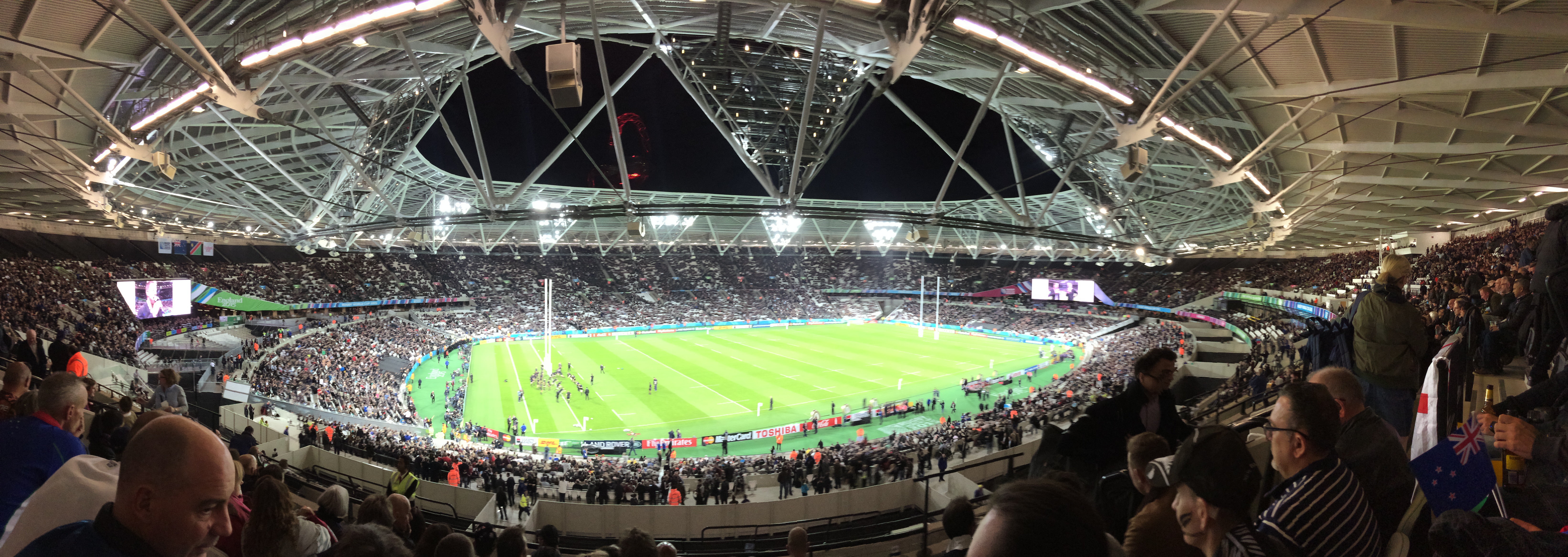
It was a privilege to be at RWC2015
It seemed to me that to make history, this team planned it from an historical moment in 2011 and drew strength, insights and learnings from that and other experiences in the past. Using Story-telling at its best and most effective I reckon.
You might not make a Rugby-mad public excited as it was today, but what can your stories do for you and your team?
Check out that link for quick tips on developing your own story.


 Stephen Drain's Leadership Blog