Totara

There’s a large Totara in the forest that we visit during the Authentic Leadership Course. It’s been there for longer than any human being and will probably be there for much longer than any of us. It feeds the smaller trees, provides shelter, oxygen for all of us and not to forget, a great leadership conversation. The AUT Vice Chancellor Derek McCormack has described the death of our Chancellor Sir Paul Reeves as a mighty Totara fallen (if you’re not a Kiwi and aren’t sure check this out for what a Totara is).

A friend and former colleague visited me yesterday to talk about his new business venture that we might be able to connect together on. We caught up on events of the last year or so including a story he had of a client, who imagining that my friend was talking bad of him, demanded that the business conducted with the firm be handled by others, or else! Knowing all those involved as we both do, we laughed at the absurdity and paranoia displayed.

There couldn’t be a more stark contrast in events from a fallen Totara, to, well how do you similarly describe a small-minded petty person without offending any plant life?! Sometimes these comparisons are helpful to recognise that not everyone is suited to leadership and the big-mindedness that goes with it. I met Paul Reeves last at the opening of the AUT Manukau Campus and I know him by reputation within AUT to have been a mentor, friend and true leader for the institution.

This Friday I’m going to talk to 300 school prefects. That feels good, not only  because I never was a prefect (!), but because as young leaders, the opportunities are endless and I find the hope and energy of youth refreshing and energy-giving. I find inspiration in the success of younger people  – my son Tim was never a prefect either, in fact school wasn’t always the best time for him but now, studying a topic he’s passionate about his success is inspirational to me and makes me very proud too. I hope that the prefects are inspired by the mighty Totara Sir Paul, and that they carve their way in the world as leaders, not copying Sir Paul, but through their own authenticity and innovation making a difference in their own way.  They’ll take from Sir Paul a life of service which is a word often forgotten in leadership.  I’m not sure what I’ll say but it’ll be something alone those lines and I hope that in my 30 minutes we hear from some of them too. Afterall, if you’re a leader, you need to be seen with head held high.

Stephen

Expecting the same

The definition of insanity is expecting a different result by doing the same each time. Or so said a business associate of mine when discussing some contracts she is involved with. It was the movies again last night for me:  Larry Crowne was a lifer at Umart who was sacked because his lack of college education meant that there was no prospect of promotion. Larry went off to university in an effort to make a step change in his life. He found a girl and you can guess what happened.

Not everyone likes a step change.  Some people want gradual change  and believe that step changes, especially if the team make-up changes dramatically, do more harm than good in the end.

Larry had originally trained as a navy chef and started courses in economics and in public speaking to make his step change. As the public speaking course progressed it looked more and more like story-telling (sorry but can’t resist putting a plug in for our brand new website at CIL!). Larry wanted to make a change by gaining a university education. In the end the biggest change he made was the people he met. And in the process he discovered that he didn’t need any theory about public speaking – all he needed was to unlock the authentic story of his life. All of that was a big step change.

The thing about change is that we never really know what the end result will be – what we do know is that when it’s started it won’t be the same again – which for Larry Crowne was the main thing.

Do you want a different result? Then you need to do something different, sometimes we won’t even know where it will end and the most important thing is that change has begun. I quite like the concept of a change from a burning platform. There’s a saying that you have one month to make a change for a significant life event. Unless you want the same, go for it!

Although it’s a predicable feel good movie, it’s funny and off the wall in places. I enjoyed it.

Stephen

Happy to be what you are

Mahmud Omid Djalili is a Muslim living in London with his wife and family in the movie The Reluctant Infidel. He discovers much to horror, that he was born to Jewish parents and adopted by a Muslim Pakastani family when he was two weeks old. The anguish of how to deal with this including how to tell ones loved ones. Especially when his son’s future father-in-law is a radical cleric from Egypt and needs to give approval for the wedding.

We all gain at least part of our sense of who we are from our ethnicity, our parents and our culture and possibly the religion of our parents and community. But what if there was a missing link on the way through like there was for Mahmud?  Would your whole sense of being be brought into disarray? Does it matter?

As it turns out (and we know this), Mahmud discovers it’s the same god, that actually Muslims and Jews have much in common and in the end he’s still the same father, businessman, husband and friend he was before he knew about his birth parents. Only he’s nicer. Aware of the absurdity of forced demarcation we get from religion, he brings the two together with new understanding and tolerance.

It’s a comedy, or more particularly a farce, but it’s got a great lesson in leadership about finding commonality by seeing through artificial contrivances and having the ability to laugh at ourselves.

It’s worth seeing!

Stephen

Are you expected to be 24/7?

I’ve taken a few days off to, well not to do too much, but sorting out things at home, having lunch, even some cleaning, changed a couple of light bulbs that had been staring at me, dead, for quite a while. Even cleaned the fish tank.

Recently the Auckland District Health Board announced that they were considering not employing people who smoked. If health workers are to engage patients then they need to role-model the behaviours that are expected. I must admit I feel less confident if I’m seen by a Doctor who looks like he or she might be overweight, have high blood pressure or in otherwise risky condition. Of course what do I know, but you do get a sense!

I’m still responsible for the Centre for Innovative Leadership while I’m on leave but I’m sure you’ll agree I can do my own stuff, how I like and when I like. Role-modelling in leaders is arguably the most powerful of all leadership attributes and happens whether you like or not.  I often simplify leadership to the concepts of resilience, relationships, change, teams, adversity and vision. Most things flow from a leader’s ability to exhibit positive engagement and pro-activity in these aspects of leadership.

So if you’re not in good health, a narcissist (but relax you can’t help it, just stay away!), can’t maintain relationships with those you work with, or pretend to like teamwork but really only like that there’s a team doing your work, then leadership might not be for you.

And if you work for the health board looking after the sick and injured then it’s probably a fair bet that your patients are wanting to trust what you say, as well as what you do. Smoking doesn’t really cut it in that sphere.

So you don’t need to be on full alert 24/7. Afterall, authenticity doesn’t need such vigilance, it’s authentic and natural, just like the work means. You do need the characteristics of leadership 24/7 though, otherwise you aren’t role-modelling. Which is why I’m running on my days off to keep my resilience up (and my trousers fitting too!). Not just because it’s a role-model of leadership, but because it’s who I am.

Stephen

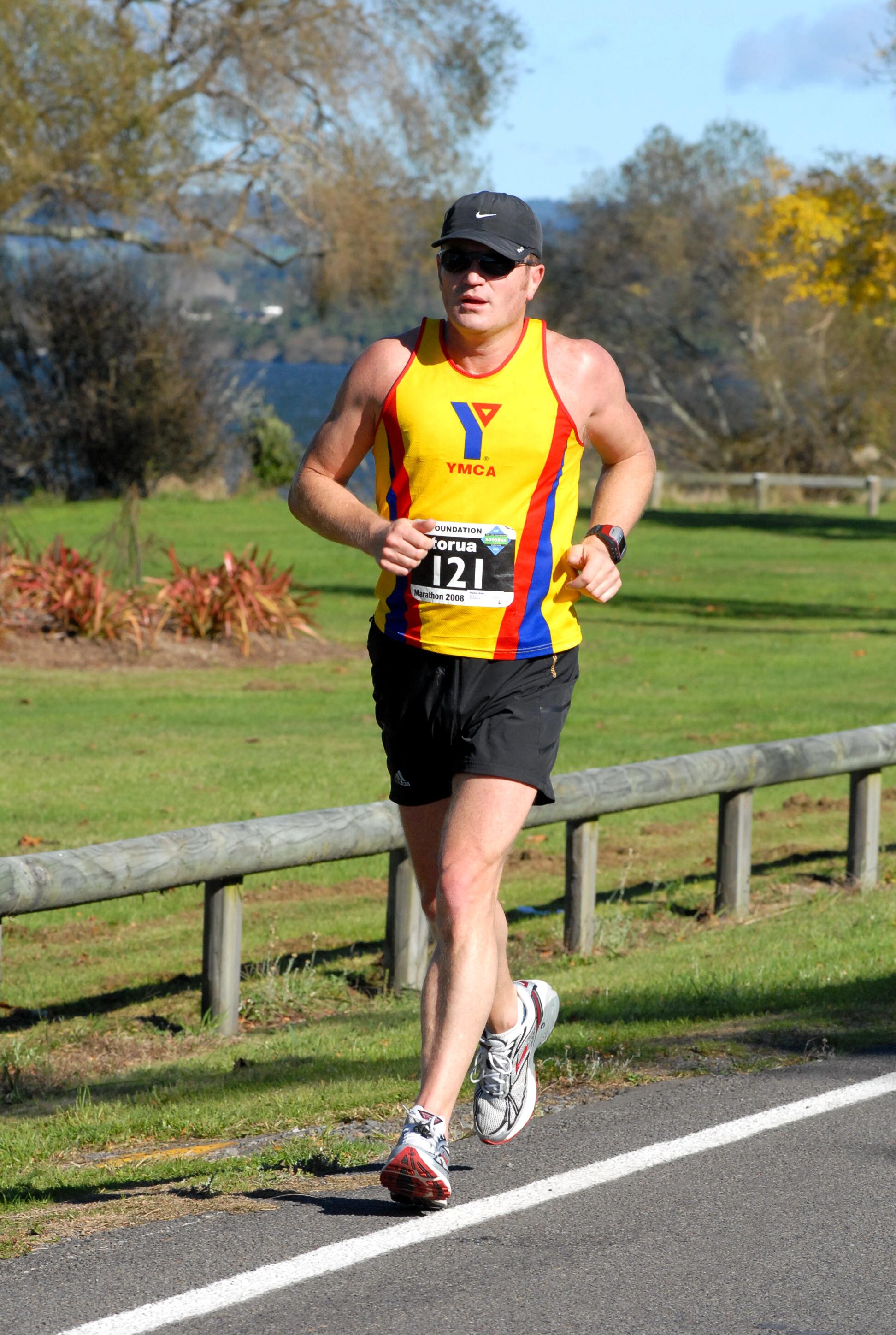
ps And I’m determined to get in as sharp a shape as I was here for a PB!