Is just being yourself authentic?

Sometimes on the Authentic Leadership Programme we discuss whether a toxic leader who acts out in his or her’s own so-called “authentic” leadership style is an authentic leader. This argument has special validity for a leaders with sizeable followings.

Cutting to the chase can it really be authentic to be toxic, petty, vindictive, micro-managing, untrue etc?

blehCan it be leadership, nonetheless?

We see political leaders in the US bringing together followers of an ideology. Some of those leaders appear very thinned skinned, prone to name-calling, vindictive and divisive – putting groups of people based on nationality or religion against their followers.

Can this be authentic leadership? Surely not!

I think you have to say it is leadership – not the sort of leadership many people find helpful, but leadership nonetheless.

What about authentic leadership? No, not by any stretch of the imagination.

Authentic leaders have self awareness and examine their own strengths and weaknesses, acknowledging who they are to their followers.

Authentic leaders are transparent.

Authentic leaders have a strong ethical compass that guides them in decisions and life. Followers will know that ethical compass and it will be available for scrutiny. It will involve embracing diversity, not engaging in toxic or narcissistic behaviours such as bullying or name calling.

Authentic leaders build a following on making their organisation or whatever it is they lead better through cooperation, engagement and empowerment.

Finally, an authentic leader strives to be, and helps others, to achieve the authentic human condition. That condition is something build on trust, seeking the best in others, relying on facts, high levels of emotional intelligence (think “social awareness” or “self control”) and seeking happiness, freedom and contentment for all.

So check, when someone says about a leader,”they’re just being themselves”. That will never be an excuse for poor leadership.

Stephen
Grandma’s insight

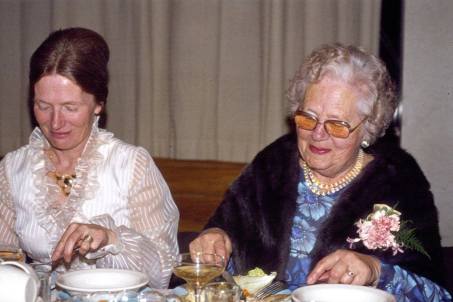
Lovely to see you come, and lovely to see you go“. So said Grandma in about 1974 after nine of us were about to depart after three weeks or so in her flat and bach. Such harsh words I thought. Surely she was sad to see us go? After all she was quite old I thought and you never know, this could be the last time (turned out she had another 16 years!).

Of course as a boy I didn’t appreciate the stress that a large group of visitors in Grandma’s flat in Sandringham and at her bach in Stanmore Bay might have caused. They were just great holidays. A long road trip from the South Island, beaches, swimming, hot days, sun burn, Waiwera hot pools and barbeques.

I had dear friends stay in the weekend (so in case they’re reading I’m not about to do a Grandma). W12657243_10206633536649957_1152946458479811167_oe cycled, dined, did some gardening and watched movies.
A colleague commented to me the other day that when you’re an extrovert it’s not always straightforward to explain to those close to you that you need downtime. Which I have found to be true.

I’m an extrovert and part of me needs recharging with time alone. More so as I’ve got older (which might be another post).

Thanks to Grandma for the wise leadership insight all those years ago.

Stephen

p.s. this is her in 1979 with my mother. I can imagine she’s smiling from being reminded about this story.

Trumbo

Dalton Trumbo was a Hollywood screenwriter who refused to answer questions before a congressional committee “investigating” un-American activities. Along with 10 other writers he was put on a blacklist and, like thousands of others, treated as a traitor, a communist and un-American.

Before seeing the movie I hadn’t heard of Trumbo, but I know a bit about the anti-communist hysteria that existed in many countries during the Cold War.

Misguided people who marginalise and build fear against minorities have existed over many millennia.

It’s a great story told as a movie, and there’s important reminders in it for leaders, especially now.

Stephen

A picture of leadership

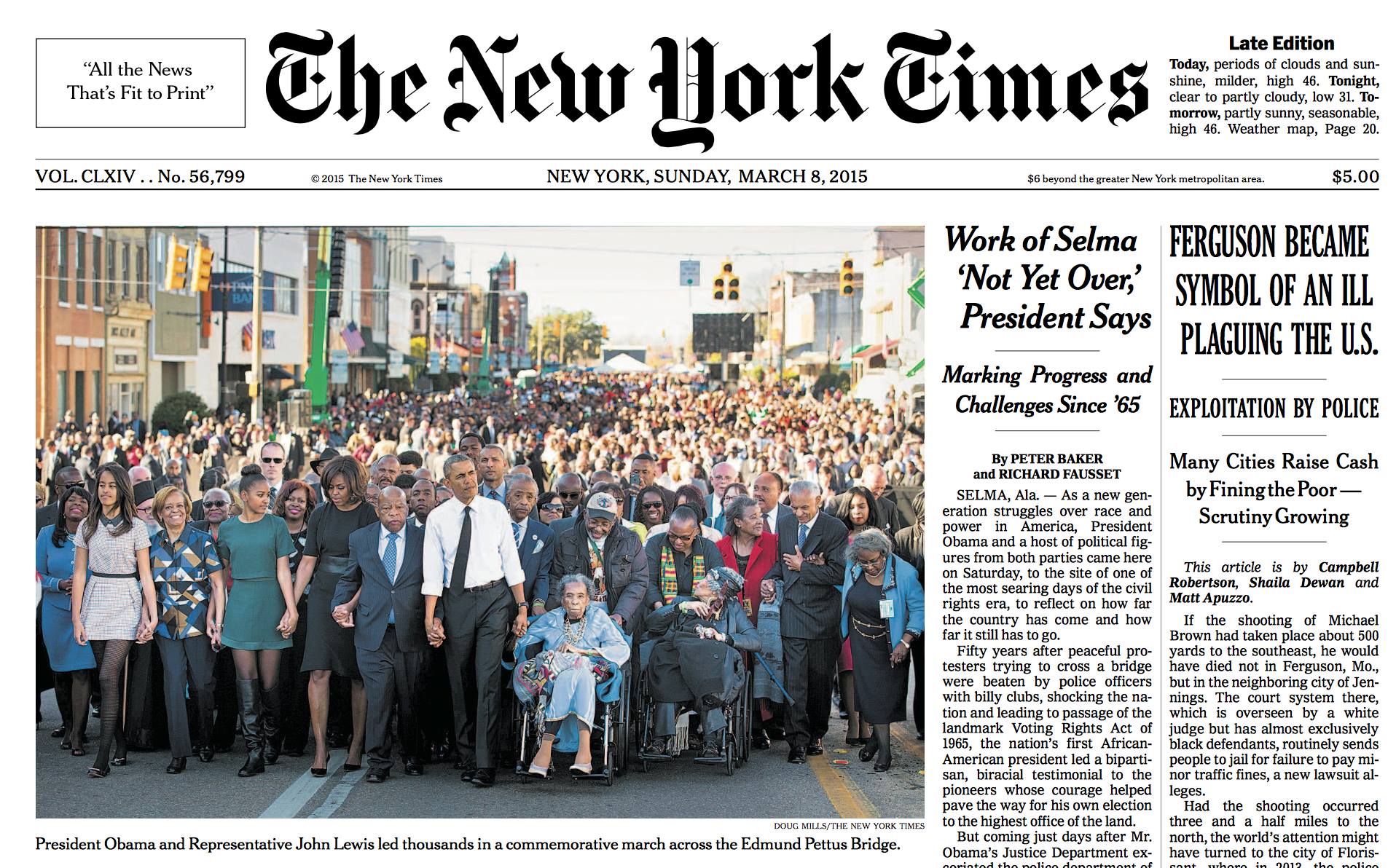
I’ve already mentioned Selma in a recent blog. Then it was music. Now it’s a picture. This cover page from the New York Times says so much that is good in leadership: Out the front, sleeves rolled up, a purpose, all sorts of ordinary people on board, some real stayers who have been with the challenge since the beginning, reflection on past battles, never growing weary and together.

A picture of leadership's many facets.
A picture of leadership’s many facets.

What would your picture of your leadership look like?

Stephen