What is the governor watching?

Someone started a LinkedIn discussion today with the proposition that the natural focus of Australian companies for their boards is statutory, financial and taxation compliance.  The question that followed was about the sort of director training and experience required. In the weekend I facilitated a workshop for an Auckland-based not-for-profit. Topic: Governance. Delivery by me: You need to know the law including your responsibilities and powers, you need to understand the money and you need to work out how you’re going to get the organisation to meet its vision through empowering yourselves and the organisation.

I can show you how to read the financial statements, I can tell you the law, I can suggest you the questions you might ask of each other and the management. And I did.  Where you’ll ensure that you become that special organisation you want to be  is to work out what you really stand for, what success will look like, how you will work together, and what you will do to make a difference in (this case) your community.

As I researched to make sure I had the latest material for the workshop I realised that most of the research about boards is about checking, monitoring, managing risk and compliance. Oh but you won’t go anywhere without that you will hear if you attend any training on governance in New Zealand (and by the sound of it Australia too). True, but I say that’s just the start. The men in suits are good at this, probably better than I’ll ever be – and it’s the context that makes it complex for sure – but if your board is focussed only on monitoring I reckon there are some key questions you should be asking:

  • What is in the board papers? Are they only full of reports that cover off the law and finances to cover your compliance requirements?
  • What is the order of the board agenda? Do we deal with monitoring first?
  • When you get to discussions about vision, strategy, culture or empowering the CEO is your head so full of compliance (and maybe you’ve had enough) that the energy is gone?
  • Will you really be creative at the end of a long session of ticking off stuff?

As a new board member you might feel very proud to be on a board.  You’ll be reminded to stay out of the operational matters. In doing so you might also be staying out of the very thing that you can truly add value, by encouraging an appropriate culture – sometimes paradoxically to your assumed role by encouraging risk taking – setting the scene by behaving in an open and inquiring manner, and bringing your focus on what management is doing to create leadership.

Even if you’re doing this your CEO – who will almost certainly have the tax, finances, legal requirements covered by functional experts – will recognise that not only is it his or her job to grow a team, but it’s what you’re watching too.

So if you spend your life as a director or trustee ensuring no-one including you gets sued, great, we need you. One or two per board will do. For the rest of the board, we want people who are going make the difference. The difference that started the organisation might be a place to start. Is the video clip below what you experience?

Stephen
Wedded to tradition

In working with mission, vision and values we often hear stories. Some include traditions and there’s something in many of us that is attracted to tradition. For stability perhaps, sometimes as a guiding torch from the past to show the path forward. It’s a got a solid, perhaps staid, but reliable feeling, that word tradition.

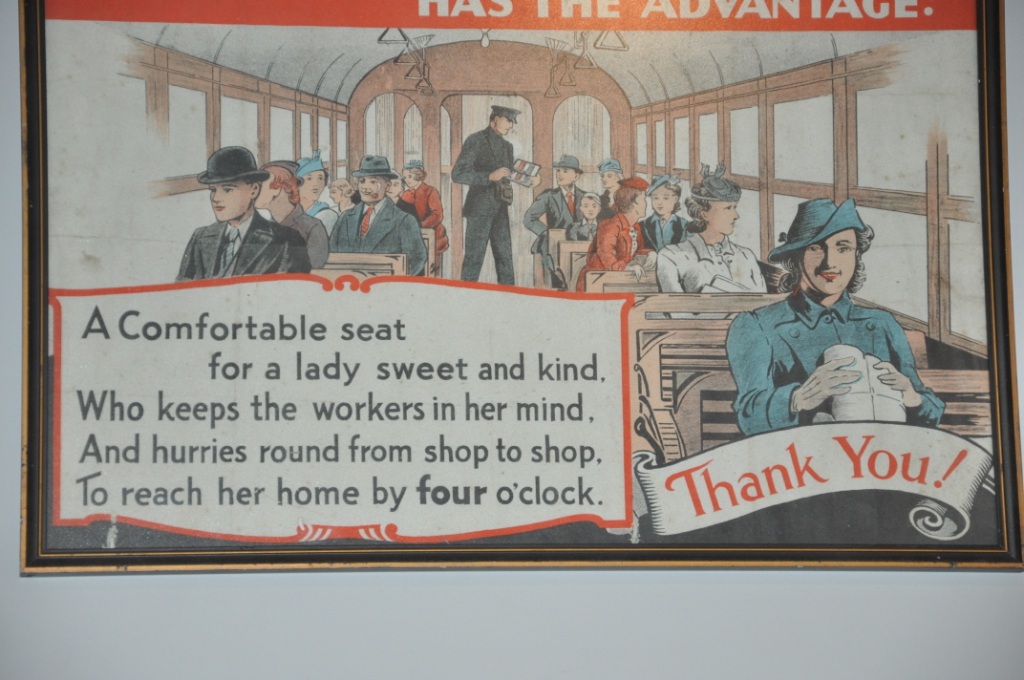
Home in time to cook for your man

Last night I saw the delightful New Zealand movie My Wedding and other Secrets. Chinese Kiwi girl meets Pakeha Kiwi boy but it has to be kept secret because of traditional Chinese thinking about mixed-race relationships. That it’s Chinese traditional thinking is probably of little consequence to the message here – it could easily be in reverse in some families.

It got me thinking (again!) about this tradition thing. My first reaction to it was that it was more about control – or more particularly losing it – than any value-driven tradition, that made Chinese Mum and Dad so difficult. I found it difficult to understand what the basis or purpose of the tradition was. It looked solely like a desperate bid to control a family and replicate the parents’ own experience. Apparently it’s based on a true story and I’m not surprised – it’s probably true many times over.

Having reflected for 24 hours I’m still in the same place. It sounds really obvious but when we refresh ourselves, our teams or our organisations we have to let stuff go – you know that – we say it too out loud don’t we? Traditions need to be on the table for culling too. They might be plain wrong.  Are you hanging on to some apparently wise tradition from the past, when actually, you have more to offer, more enlightenment and wisdom than those that went before?

After all: Zeus, witches, a flat earth, smoking, hitting kids, only men voting or managing, racial segregation, state-sponsored religious indoctrination were the hallmarks of wise traditions in the past. And still are in some places.

Wise people live today, not just in the past. Chances are you’re one of them.

Don’t waste it.

Stephen

ps it’s a lovely movie

Take your time

It’s a crazy time of the year – hot, wet today, busy, traffic is mad. And all the time our planet is hurtling through space at 1m km/h (that’s the relative speed of earth around the sun and our galaxy through our universe I think but I digress!). It’s been a busy couple of weeks. After 12 years of waiting, my son Tim had a replacement cornea graft which is promising for his vision. I was surprised how emotional I felt when he went into surgery. It’s been a long time, or felt it, waiting for his eyes to be in good health for the procedure. Before and after the surgery I’ve been helping lead teams develop their charters and learn about themselves. Which takes time.

The charter is usually just the beginning, but it’s a really important beginning, setting the rules of engagement and developing a vision of what the team would like the future to look like. One exercise that was supposed to take 15 minutes yesterday with one group took an hour and a half. You might ask if that mattered? Well yes it did. It mattered a lot that the team went where it needed to, taking the time. At the end of the session, they said that this first part was the most valuable.

Management requires action. Leadership needs patience. We need both but the best actions are those that follow a patient time of leadership. Professor Charles McGhee, Tim’s masterful surgeon who espouses opportunity and optimism on each encounter knows about patience. He knew not to rush in. But when it was time, he showed the best action you could hope for.  Two hours of careful surgery and Tim’s new cornea was in situ. And all around was a medical team who worked as one, including a theatre nurse who was there for Tim in 1995.

Vision for vision.

Stephen

Should we get a subway?

I picked up a Subway at Papatoetoe by the Caltex the other day.  I joked to what I now know is the franchise owner, that I could repeat the whole conversation almost word for word:  What meat Sir? Extra Cheese? Any extra bacon or avocado? This time I did get extra cheese and he challenged me that it might sound repetitive but, he’ll get more business that way. Well he did! Good on him. As I was getting into my car, he came running out with a voucher for another customer who had won a free cookie. “That’s what you call service, I remarked”.  “He shouldn’t have forgotten it in the first place” said she. Right.

There’s a pretty interesting idea promoted by the new Auckland Council for an underground train link through central Auckland. My son Tim finished school yesterday for good. That’s 16 years of schooling with both Tim and Tom now finished and off to tertiary study. Tim has low vision and although he’ll be having surgery again soon which is very promising, he’s someone who is dependent (as many are) on a good public transport system. Leadership is not just about getting things done, but having the vision that will get others going.

I notice that slowly, but surely, the new Auckland Council is stamping its name and branding across the city – from roadwork upgrade signs, to rubbish trucks and the public library in Parnell. It’s Auckland Council. Someone has that detail worked out.

Like the guy in the Subway at Papatoetoe – he knows the details that will make the business grow and goes the extra mile for even the most ungrateful customer.  I reckon he probably has a vision that his Subway will be a big success in this part of the world. He deserves it.

And I hope that a vision for a big subway up the road will come to make life for my boys and their families a better one in the years to come. A vision for a subway. Yes, I like it.

Stephen