Sorry officer, I never usually speed

There is a lack of faith in Police leadership because rhetoric does not always align to action” reads the second to last sentence of the body of the latest report into the police’s change management programme following the Commission of Inquiry into police conduct.

Commissioner Broad in his blog commenting on the unfortunate negative focus of the report, records himself as satisfied as to progress on the culture issue. Police union boss Greg O’Connor says that this report will to more harm than good.

My latin scholar son Thomas would be proud of me: argumentum ad consequentiam meaning X is true/false because of how much I like/dislike its consequences.

So is the report wrong? A listing of things ticked off as Commissioner Broad has done on his blog and Greg O’Connors “telling bad news will only do harm!” is enough to convince me all is not right. Then there’s the report.

I’d like to see leadership from the police and its union that even occasionally acknowledged that they aren’t perfect. Then we’d know that there was a willingness for change. If every problem is minimised as a bad apple or “we’ve already got procedures in place to cover that” or “it was the fault of the other driver” then we can be sure that nothing is changing.

Because the first step in changing a culture or for that matter, a behaviour, is to want to. And that means accepting that what’s going on is wrong.

The police should reflect our tolerant, secular and largely peaceful population. Not the bullying and harassment that is obviously still happening inside the police – even if it’s only in small numbers it’s not good enough. If we can’t trust what they do with each other, how can we trust them to deal with us?

So, sorry sir,  I’ll be issuing you an infringement notice – even one act of carelessness like this can cause a tragedy.

Stephen
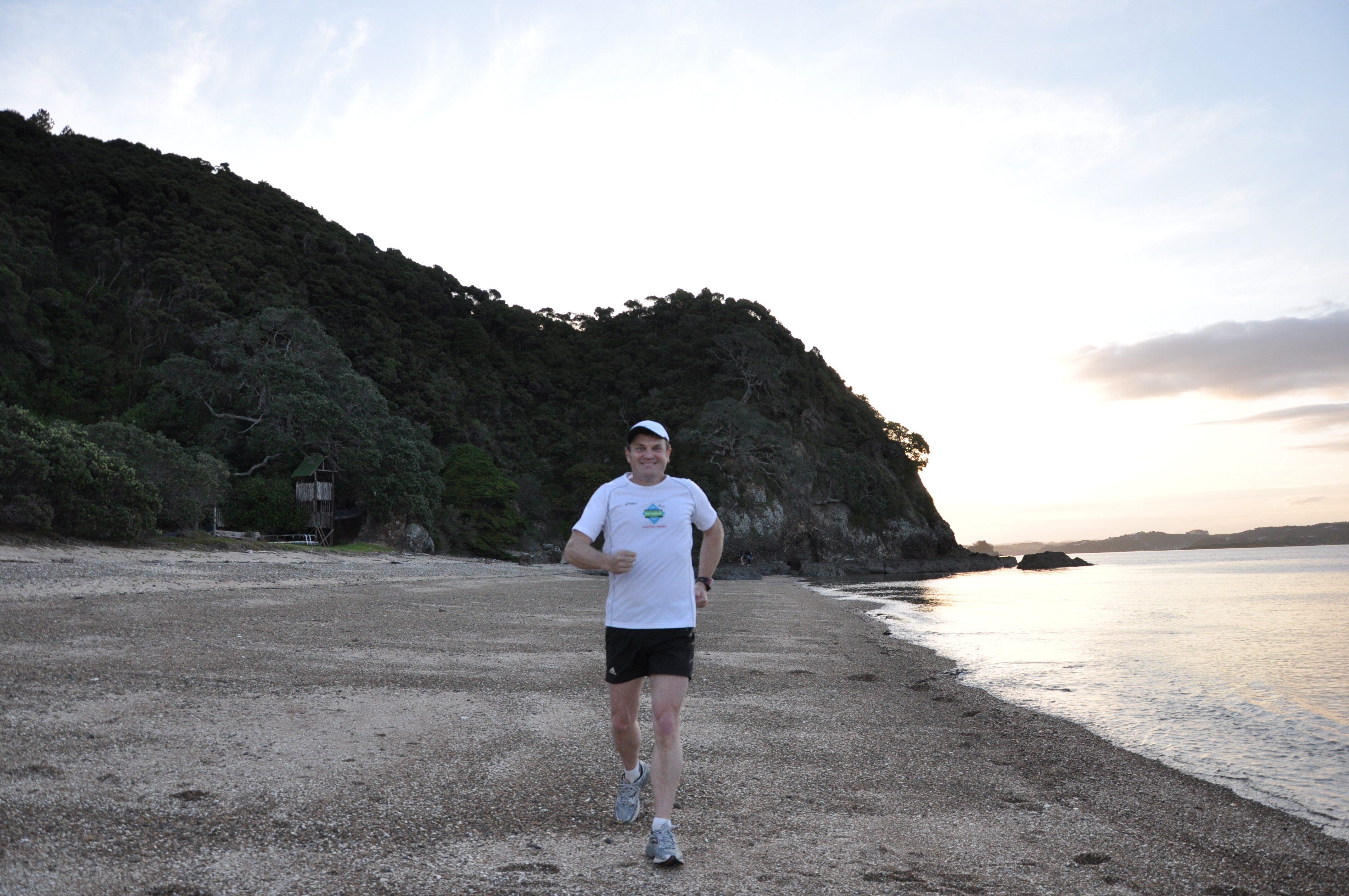
Oh the joy of running!

On 23 January 2005 I went out one morning and walked three power poles, ran three, walked three and a bit more until I had completed about 2 kilometres. It was a bit off and on the first year, but nearly 9000 kilometres later (well 8916 to be exact!) I do if asked, call myself a runner. I’m not fast, but I’m not too slow when I apply myself and in those six years I’ve completed 12 marathon events and my average run length went from 6km in 2005 to 15km in 2010.

It’s often hard but I’ve kept going with lots of support – especially from Michael Simons who I’ve mentioned before – and the other regulars on Monday and Wednesday: Julie, Maria and Froste. Mum and Dad have almost always been there to face my mid-marathon abuse! And recently my son Tim took the ferry to Waiheke to see me complete the Wharf2Wharf.

I’ve learned a lot about myself through running:  the space to reflect when going solo, pushing myself really hard to see what I am capable of, encouraging others and being encouraged when the going gets tough and of course a bit of healthy competition to make you go that little bit harder.

I’ve discovered a lot about our great city – you see so much when you’re running that you miss in the car or bus. Running knows no boundaries and the legs work just as good or bad in Marine Parade Herne Bay as they do in Massey Road, Mangere.

When I ask myself: what makes me a leader?, running is an important part of it. In fact it’s got many of the components of leadership in one neat package:  self awareness, communication, reflection, role-modelling, mental & physical toughness and resilience, it’s fun, builds teamwork and is eco-friendly.

Looking forward to the next six years.

Stephen

Does being authentic mean you can do anything?

At the end of the year WordPress, who host this blog, send me some statistics about the site, including how many visitors I’ve had, how many blogs I wrote, what the most popular pages and posts were, and what searches people use to find their way to the site.

The most common searches were stephen drainstephen drain autnegative leadershipnegative leadership traits, and rubik’s cube. I can understand the first two and last one gets searchers to me as I once wrote a blog mentioning the Rubik Cube (I wonder if I’m what they’re looking for? – all questions but no Rubik solution!). I’ve noticed during the year the regular,

Something so right - New Chum Beach, Coromandel

daily searches that people do for “negative leadership”. I don’t know who they are so I can’t ask.

But it is worth exploring in the context of authenticity. If I’m a negative prick, just because I am, then I’m authentic right? So carry on? If I lead by manipulation as that’s my natural way of doing things, authentic to me if you like, then that’s okay too isn’t it? What if I’m overly reflective and don’t participate in leadership meetings when I don’t feel like it? That’s my authentic self so why should I change?

All wrong I say. Sam Harris in his persuasive TED talk challenges a view that science can have no determination on morals. The same should be strongly asserted for leadership. As we have evolved as a species and developed a greater understanding of the human condition, leadership and happiness we are entitled to reach a scientific consensus on what is appropriate or not in leadership.

I know of leaders who use authenticity as an excuse for primitive behaviours like bullying, manipulation and silence. If nothing else my blog searchers tell me that there’s lots out there that some folk reckon is wrong. Negative.

Discovering and developing our authenticity can not be to the exclusion of growing and evolving ourselves. So if you’re a negative prick, don’t use authenticity as your excuse! Some things are just wrong. And some things are right.

Stephen

Death on holiday

It was the sight of raw grief on the edge of the forest near the little shopping centre at Matarangi as family and friends of the young man found dead kept vigil while the police did their business. There was a strange stillness with a couple of dozen police, lots of police cars, police talking in hushed tones, distant from the family. A stern, strangely familiar nod as I ran past. Wonder why they don’t ask me if I saw anything. Afterall, I might have been running yesterday.

Out on the highway, it was hot. You notice the empathetic drivers – some give you the entire lane if they can – while others assume the lane is theirs and runners and cyclists need to fit in what they don’t use up. Lots of police cars coming and going in and out of the township – they fall halfway between, giving you some room, but not a lot. You can hear their high speed tyres, almost as noisy as a four-wheel-drive.

Nearly 7ks out it was getting too hot so I stopped for a drink to see the funeral director’s stationwagon, speeding like there was no tomorrow. Strange, what could be the rush? And hasn’t he seen enough death to know what can happen when you push the limits? But I know that adrenalin-fuelled urgency from my days in the police, where you drove fast and sure-footed to and from the sober, still, scene of death. Something about death made you confuse importance with urgency, and urgency always won.

So, it was a death on holiday for the young man. Similar age to my big boys. Everyone agreed “how would you cope?”, “it’s tragic”. We feel it. We understand the grief and are secretly relieved it’s not someone we know. So what can we do to make value out of such a tragedy. If we came across someone in distress, would we call for help? Even if they said they were alright? I hope we would. We promised ourselves we would.

Give them all the space they need, but we’re on this distant planet all alone with only each other to rely on. Let’s make it a promise to look after each other. If we don’t, what then?

Stephen