Slipping up for good

It’s the 25th anniversary of the opening of the Freud Museum in London this week. Freud is famous for his study of Psychoanalysis and the Freudian Slip is a principle he came up with that says that when you slip up and say the opposite of what you meant to say or contrary, to what you meant to say, it’s because it’s what you really meant to say.

Has this ever happened to you? It’s not very authentic is it? Saying the opposite of what you actually mean to say. But then again like Jim Carey in the movie Liar Liar, you probably don’t want to walk around saying every thought you have. Or would you? Perhaps if you only had good thoughts then it would be okay, but inside me I humour myself with irony and absurdity that I see wherever I go. You don’t want to hear all that!

But sometimes slipping up with the truth is the right thing to do. Actually I’m not happy that this is not been attended to, rather than okay, let’s get onto this tomorrow.

After being away in Martinborough for most of the week last week running a leadership programme, I turned up to a mountain of stuff to be done. I worked rapidly and with intent. I said exactly what needed to be done and when it needed to be done. Someone said they hadn’t seen me like that before.

Authenticity is about your strengths and where you come from. Empathy is about seeing others’ perspectives. Can they co-exist? Yes, but sometimes you need to let Freud take over and say it as you authentically mean it. Others might need to see you perspectives very clearly!

Stephen

It’s the weekend (nearly)

I’m back at the specialist at Milford this morning to complete my testing. I was already awake at 6.00am when Mum emailed to say they had another wake-up call in Canterbury this morning registering 5.1. People probably didn’t even need to check on-line, they’ve had so many they can tell the force instantly within two or three points. Malcolm Gladwell in his book Outliers talks about 10,000 hours of experience to become truly expert at something. I wonder if 7,500 earthquakes in 10 months is getting close to qualifying for expert status. I have a sense that after this series of tests I’m going to become expert at something to do with my diet. It looks like I might be Fructose intolerant and this morning’s testing is about Lactose. The friendly man next to me is also on his third testing and we agreed that being intolerant to Lactose, living in dairy-loving NZ, wouldn’t be ideal. I’m tolerant to most things in life, except intolerance.

Sitting here for a morning is very productive and quite reflective too. I’ve one more week of a very intensive work period and I’m taking a few days off the following week to rebalance myself. So I have a sense of anticipation looking forward to some refresh time. Which is a a bit like the staff who have been arriving at the specialist rooms this morning with TGIF said in many different ways!

We like the weekend, or more particularly, we like some time away from our usual routine to recharge.  But if we’ve done the 10,000 hours there’s a good chance we’ve had more than our fair share of wake-up calls on the way through, but those experiences will have given us the resilience and experience to keep going. As we gain expertise in our area we also become more tolerant of those around us as it’s less about proving yourself, but rather enjoying the strength that comes from experience and, for leaders I hope, growing others.

So enjoy the weekend, make it a time to refresh and enjoy why we exist. To be happy. Monday will be work, but if it’s work you are passionate about, not only is that a happy place, it’s a chance to grow some more.

Stephen

The story network

I watched The Social Network the other day again while in Whakatane. It’s a story of the founding and growth of Facebook. It’s got a lot of stuff in it – seizing the moment, innovation, right time right place and, not to forget, an idea that connects people. I connect with family and friends on Facebook and see photographs and snippets from those not close by and those close by that I wouldn’t necessarily see easily.

Being too busy right now, a quick look at Facebook can keep me in the loop and provide light relief at times. In facilitation of any sort I’ve noticed it’s sometimes expected that there is level of content delivered, I mean stuff that you can physically hold and take back to the office. In my ideal world we wouldn’t need any of that stuff, we would talk, gather insights, grown and practice with each other to take back to work and home. We’re getting there, Powerpoint is pretty insignificant in my faciliation now, so that’s a start.

While in Whakatane last week we worked with the local iwi. Stories are an intregal component of building relationships in Maori culture and as part of our welcome we shared stories about who we were and why we were present. It was identical in form and content to the ’rounds’ we use in our leadership work.

This week at Waitakere Estate with a leadership team we’ve built the basis of a shared vision, learned about our working preferences, played outside all of which has inevitably led to story-telling.

What I’ve started noticing since facilitating Story telling workshops is that as leaders, we can turn so much of our work into story-telling coaching opportunities. We’ve all got a story and if we can all build those in our team to develop their stories, we can create The Story Network.  And when we do that we’ll grow our organisational culture, engage those in our teams and have some fun!

Go for it!

Stephen

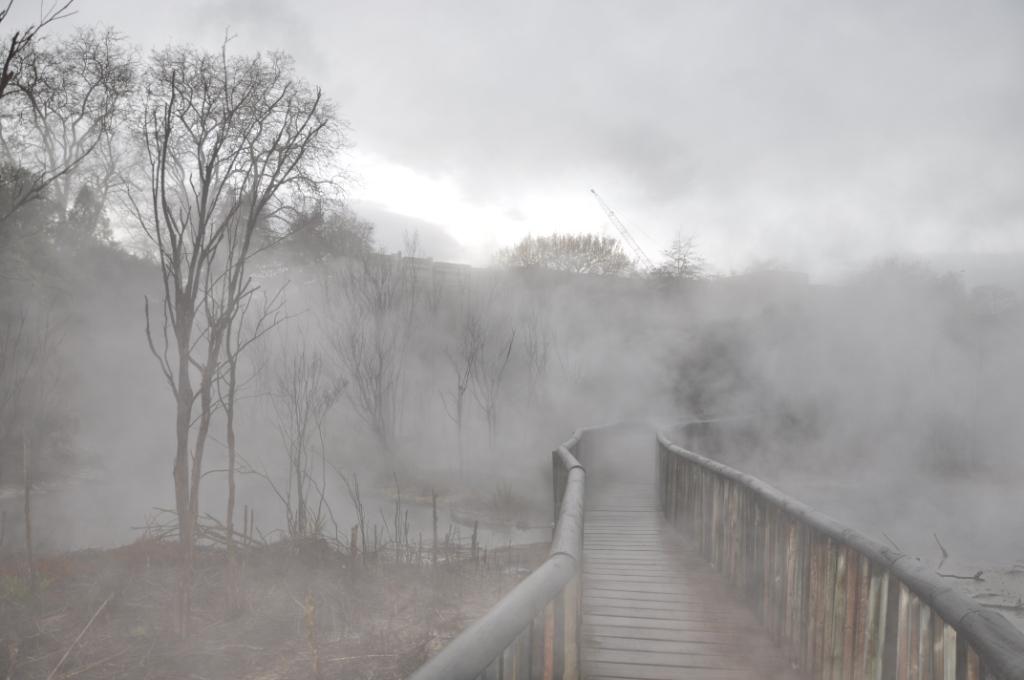
No fog but very foggy

I deal with so many inspirational leaders on programmes, courses, workshops and at conferences. It’s empowering and invigorating. We use strength-based authentic development and have lots of fun that works. Occasionally, I’m struck by how poorly we are served still in some areas of leadership.

Sixteen-year-old Rawiri Wilson was killed when a marked police car hit him on State Highway One almost two years ago on 25 July 2009. It took two years for the Independent Police Conduct Authority to tell us that there was no unlawful conduct by the police. It took them only a few hours though, to tell us that it was incorrectly reported that it was a foggy night and the police officer should have had the car’s lights on high beam, in the fog.

When I read the news article, I thought that sounded odd too, driving in the fog with your lights on high beam, so I read the IPCA’s report.

Rawiri was 16 and apparently fooling around on the road, rather carelessly.

The police constable was, as it turns out, driving in clear but dark conditions with his lights on low beam. He had sent and received texts in the run up to the collision.

The IPCA took two years to tell us that a police officer who was probably texting, driving on a dark highway with his lights on low beam, didn’t do anything unlawful. They say it was not illegal to use a cellphone at the time. Well it’s not illegal to read a book while driving now, or should I say there is no specific section of the Transport Act that prohibits it, but it’s obviously careless driving, just as reading a text is. The IPCA also say that driving with your lights on low beam on a dark road is not the action of a prudent driver. The inability to hold a cellphone, steer and operate the high beam lever might have been a factor here. But that’s for a court to sort out isn’t it?

The IPCA says “The investigation has also established that Rawiri Wilson and his cousin were under the influence of alcohol and cannabis at the time, and were not mindful of risk or exercising caution as they walked on an unlit section of SH 1 at night.” So the IPCA stand on high with big proclamations about two children. But it makes “no recommendations” about a police constable where there must be prima facie evidence of careless driving.

Rawiri’s death is sad. A boy fooling around with drink and drugs in the wrong place. We’re told driving is a privilege and everybody should drive defensively, looking out for those less protected like runners (me included), children, the elderly and those with disabilities especially. We all have a responsibility on the roads to look after each other. I don’t reckon this police constable was anywhere near that standard and it’s something Rawiri’s whanau deserve to have properly tested.

Let the police constable stand in court and tell Rawiri’s mother that he wasn’t texting and it was a tragic mistake. He’ll get some closure and so will Mum.

There might not have been fog that July night in Northland. But there’s a lot of foggy thinking again with the IPCA. Tell me again why it exists? Are we protected and enhanced in any way by a bunch of retired cops (I’m not joking!) fumbling through a traffic file for two years to tell us this?

As leaders in our community they need to demonstrate to us that they expect the police to be role-models of behaviour, not wriggle out with back-room untested legal views. Standing for something is hard for those who’s only interest is self-interest. Aptly demonstrated by sitting on their hands for two years while Rawiri’s mother grieved, then spluttering loudly like an old man with phlegm when they were misreported!

I can’t think of any aspect of leadership that the IPCA demonstrates that helps the public. Self-serving bureaucracy with no purpose.

Being in Whakatane right now with a group of great leaders it’s so so stark the difference demonstrated by the IPCA. One day I hope outfits like it will find a new way with new leadership. Because there’s plenty of good people who could make a difference.

Stephen