Facilitation for leaders

At the end of a breakfast session recently where I facilitated a session on personal values I was presented with a lovely gift book on facilitation. I joked that I took the hint! I enjoy facilitation, in fact it gives me the kind of happiness that we should all try and get to at work.

Facilitating a team or workgroup is an important part of leadership. Drawing out the blocks that stop us being mindful and in the present, ensuring we’re all heard, using appreciative inquiry to help others deeply understand their issues to grow all  those present, are some of the hallmarks of great facilitation leadership.
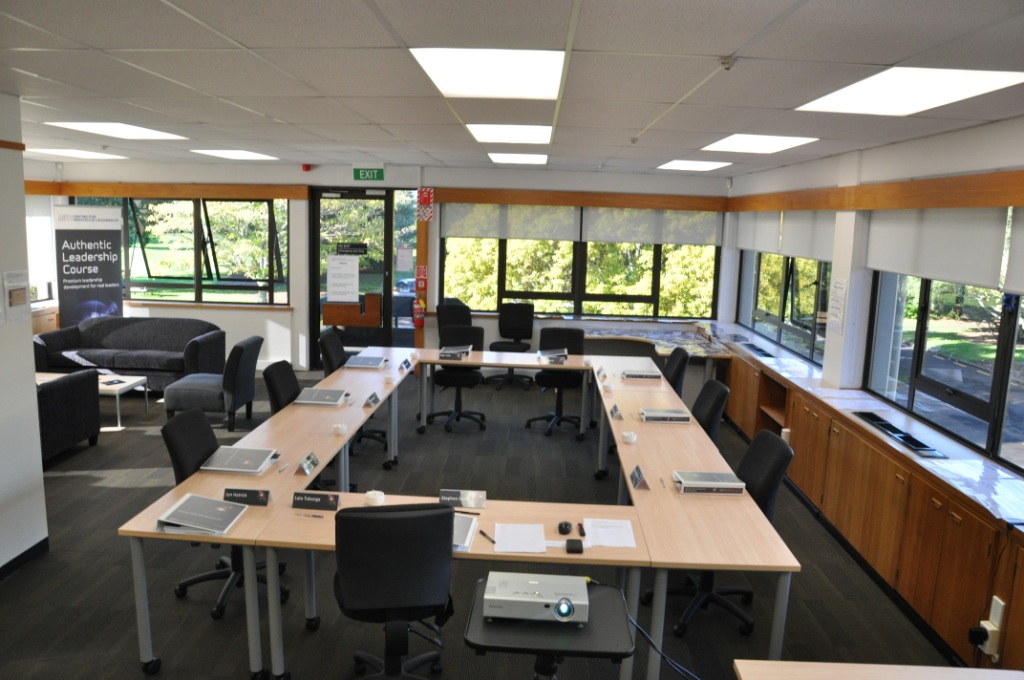
Get ready set go!

As you do more you start to notice who’s talking about the topic and who’s talking in the topic. I’ve noticed this a lot in storytelling. Some people tell stories from the heart, others share what the story is about. There’s quite a difference and it can be that those talking about the story aren’t ready for that deep sharing that comes with authentic leadership.

But there can be another reason. So many people are in a rush – give me the bottom line, what’s the key point, we’re all busy so need to move on – you know the signals that espouse efficiency and signal impatience with real meaning.

So if someone in your team is not opening up, try time. Set aside some facilitated time, time to properly hear, be patient, ensure everyone knows not to speak until it’s their turn and you’ll be amazed what comes up. The leadership gems are available for the sake of an hour or so of time.  You’ll need to role-model the listening discipline, watch you don’t watch the watch and actively listen.

Not really that complicated, but a rare gift in our busy lives.

Stephen

Stories we didn’t hear

We never heard their last moments and we didn’t even find their bodies, but the families and friends of nine people who perished in the Christchurch earthquake had their day in the coroner’s court last week. The chief coroner decided that they all died from multiple traumatic injuries and I guess some closure was brought to the families and others close to those that perished.

I just liked this photo that I took today!

They didn’t do anything special – they were just in the wrong place at the wrong time when the earth moved as it regularly does, especially in Christchurch at the moment.  Luck can be a good thing, but also a devastating thing and my thoughts are often with those that lost loved ones  in the 22 February earthquake.

Facilitating a day of storytelling workshops last week we heard some fantastic stories, from the heart. Disclosures of events long ago were made, as the group worked with each other and shared, and in the process grew. Storytelling has a practical application in developing and enhancing leadership. There is nothing more rewarding than hearing a story from years past, and the meaning that it now brings to the leader. Or so I thought. When I thought I’d uncovered all the depth that could be to discover from one participant, I asked (intending to work with how the same stories are told differently in different contexts) “So you’ve told this story before”. Answer “No, that was the first time”. Given the story, that was big and I reckon we had a very special session for all those present.

Luck can decide all sorts of things. Share your stories now. You’ll be giving a gift to everyone, including yourself. Luck put us on the planet. Don’t wait I say.

Stephen

Is that my hot water?

I’ve worked very late the last few days getting ready for a new programme we’re running next week. Working late when under pressure can test my resilience and with it, my sense of humour but I’ve kept it intact so far. Well that’s my own reflection anyhow and I’m the one doing the writing here!

I spent yesterday in Mt Maunganui with clients workshopping (is that really a word?) some concepts that will be used to roll out some performance management and training over the coming year. It was a pleasure to work with people who know how to have a laugh. We cracked jokes and had several Larry David moments including “was that hot water for my long black or are we sharing? I feel I need to claim it if it’s just mine you know”.

I reckon we achieved a lot yesterday. We worked pretty hard and the ability to have a laugh during the process was an important component of how we worked. We didn’t put a team charter together, we all took roles at leading and at times there were random jokes that on the face of it distracted, but actually kept the energy up, the connections alive and the thought processes going.

Do you know anyone who doesn’t enjoy a joke? Is there a relationship between humour and creativity? Humour and irony in particular is an important part of our culture and can have an important role in leadership.

Do you use humour in your leadership? Do you try to? Or does it just happen? Giving feedback truthfully and with empathy will require emotional intelligence, experience and a lot of self-awareness. Delivering difficult news about a restructure proposal will be a serious business. And you won’t want to make light of it.

Lot’s of leadership though, is about creating an energy that gets your team in a creative space, if you’re wanting to take your business to the next level. Taking that step-change you know you need to create to make a difference.

That’s where humour can come in. Not taking the mickey out of each other – that can easily be bullying – but sharing humour with each other. Irony that acts like a team brain gym, keeping the energy up and the creative juices flowing.

Think of it another way: does the permanently serious boss who frowns when you’re having a laugh really get the team going? Chances are it’s about something else – some fear of not being in the group which he or she won’t be if there’s no engagement. No casual Friday around this dude!

So are you a leader with humour? I’d say you can’t be one without the other. Humour is that special, connecting characteristic of being a human being that not only separates us from the animals – it can separate us from the mundane.

Back off, the hot water is mine! It’s actually quite a serious business. Maybe humour is actually the opposite of what we think it is. Seriously, you need it. Especially if you want to engage.

Stephen

What is the governor watching?

Someone started a LinkedIn discussion today with the proposition that the natural focus of Australian companies for their boards is statutory, financial and taxation compliance.  The question that followed was about the sort of director training and experience required. In the weekend I facilitated a workshop for an Auckland-based not-for-profit. Topic: Governance. Delivery by me: You need to know the law including your responsibilities and powers, you need to understand the money and you need to work out how you’re going to get the organisation to meet its vision through empowering yourselves and the organisation.

I can show you how to read the financial statements, I can tell you the law, I can suggest you the questions you might ask of each other and the management. And I did.  Where you’ll ensure that you become that special organisation you want to be  is to work out what you really stand for, what success will look like, how you will work together, and what you will do to make a difference in (this case) your community.

As I researched to make sure I had the latest material for the workshop I realised that most of the research about boards is about checking, monitoring, managing risk and compliance. Oh but you won’t go anywhere without that you will hear if you attend any training on governance in New Zealand (and by the sound of it Australia too). True, but I say that’s just the start. The men in suits are good at this, probably better than I’ll ever be – and it’s the context that makes it complex for sure – but if your board is focussed only on monitoring I reckon there are some key questions you should be asking:

  • What is in the board papers? Are they only full of reports that cover off the law and finances to cover your compliance requirements?
  • What is the order of the board agenda? Do we deal with monitoring first?
  • When you get to discussions about vision, strategy, culture or empowering the CEO is your head so full of compliance (and maybe you’ve had enough) that the energy is gone?
  • Will you really be creative at the end of a long session of ticking off stuff?

As a new board member you might feel very proud to be on a board.  You’ll be reminded to stay out of the operational matters. In doing so you might also be staying out of the very thing that you can truly add value, by encouraging an appropriate culture – sometimes paradoxically to your assumed role by encouraging risk taking – setting the scene by behaving in an open and inquiring manner, and bringing your focus on what management is doing to create leadership.

Even if you’re doing this your CEO – who will almost certainly have the tax, finances, legal requirements covered by functional experts – will recognise that not only is it his or her job to grow a team, but it’s what you’re watching too.

So if you spend your life as a director or trustee ensuring no-one including you gets sued, great, we need you. One or two per board will do. For the rest of the board, we want people who are going make the difference. The difference that started the organisation might be a place to start. Is the video clip below what you experience?

Stephen