Happy to be what you are

Mahmud Omid Djalili is a Muslim living in London with his wife and family in the movie The Reluctant Infidel. He discovers much to horror, that he was born to Jewish parents and adopted by a Muslim Pakastani family when he was two weeks old. The anguish of how to deal with this including how to tell ones loved ones. Especially when his son’s future father-in-law is a radical cleric from Egypt and needs to give approval for the wedding.

We all gain at least part of our sense of who we are from our ethnicity, our parents and our culture and possibly the religion of our parents and community. But what if there was a missing link on the way through like there was for Mahmud?  Would your whole sense of being be brought into disarray? Does it matter?

As it turns out (and we know this), Mahmud discovers it’s the same god, that actually Muslims and Jews have much in common and in the end he’s still the same father, businessman, husband and friend he was before he knew about his birth parents. Only he’s nicer. Aware of the absurdity of forced demarcation we get from religion, he brings the two together with new understanding and tolerance.

It’s a comedy, or more particularly a farce, but it’s got a great lesson in leadership about finding commonality by seeing through artificial contrivances and having the ability to laugh at ourselves.

It’s worth seeing!

Stephen

It’s the weekend (nearly)

I’m back at the specialist at Milford this morning to complete my testing. I was already awake at 6.00am when Mum emailed to say they had another wake-up call in Canterbury this morning registering 5.1. People probably didn’t even need to check on-line, they’ve had so many they can tell the force instantly within two or three points. Malcolm Gladwell in his book Outliers talks about 10,000 hours of experience to become truly expert at something. I wonder if 7,500 earthquakes in 10 months is getting close to qualifying for expert status. I have a sense that after this series of tests I’m going to become expert at something to do with my diet. It looks like I might be Fructose intolerant and this morning’s testing is about Lactose. The friendly man next to me is also on his third testing and we agreed that being intolerant to Lactose, living in dairy-loving NZ, wouldn’t be ideal. I’m tolerant to most things in life, except intolerance.

Sitting here for a morning is very productive and quite reflective too. I’ve one more week of a very intensive work period and I’m taking a few days off the following week to rebalance myself. So I have a sense of anticipation looking forward to some refresh time. Which is a a bit like the staff who have been arriving at the specialist rooms this morning with TGIF said in many different ways!

We like the weekend, or more particularly, we like some time away from our usual routine to recharge.  But if we’ve done the 10,000 hours there’s a good chance we’ve had more than our fair share of wake-up calls on the way through, but those experiences will have given us the resilience and experience to keep going. As we gain expertise in our area we also become more tolerant of those around us as it’s less about proving yourself, but rather enjoying the strength that comes from experience and, for leaders I hope, growing others.

So enjoy the weekend, make it a time to refresh and enjoy why we exist. To be happy. Monday will be work, but if it’s work you are passionate about, not only is that a happy place, it’s a chance to grow some more.

Stephen

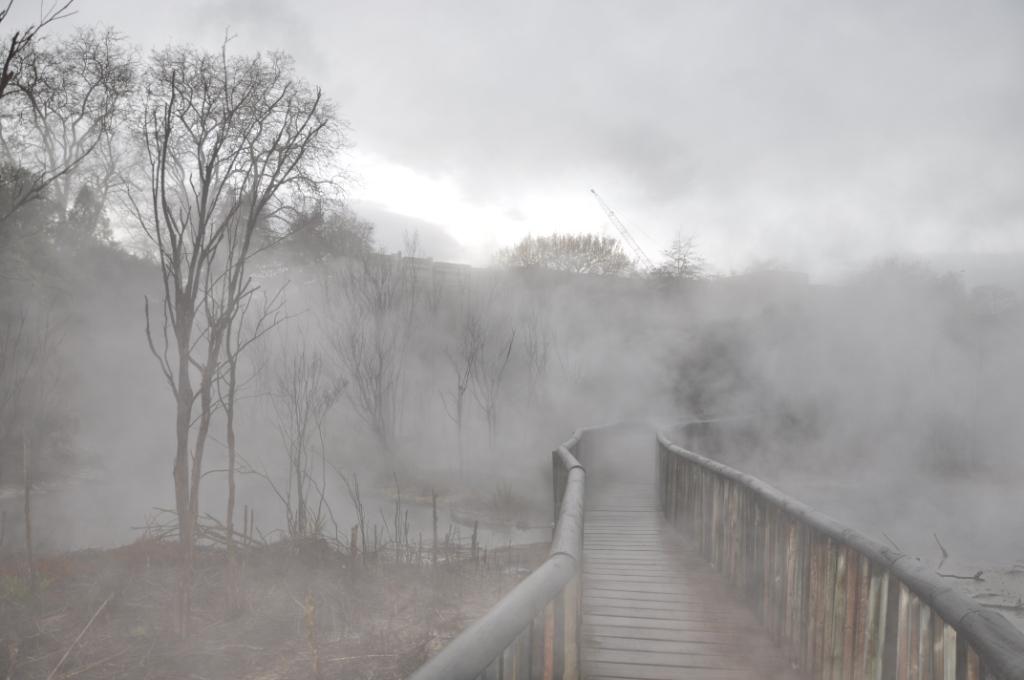
No fog but very foggy

I deal with so many inspirational leaders on programmes, courses, workshops and at conferences. It’s empowering and invigorating. We use strength-based authentic development and have lots of fun that works. Occasionally, I’m struck by how poorly we are served still in some areas of leadership.

Sixteen-year-old Rawiri Wilson was killed when a marked police car hit him on State Highway One almost two years ago on 25 July 2009. It took two years for the Independent Police Conduct Authority to tell us that there was no unlawful conduct by the police. It took them only a few hours though, to tell us that it was incorrectly reported that it was a foggy night and the police officer should have had the car’s lights on high beam, in the fog.

When I read the news article, I thought that sounded odd too, driving in the fog with your lights on high beam, so I read the IPCA’s report.

Rawiri was 16 and apparently fooling around on the road, rather carelessly.

The police constable was, as it turns out, driving in clear but dark conditions with his lights on low beam. He had sent and received texts in the run up to the collision.

The IPCA took two years to tell us that a police officer who was probably texting, driving on a dark highway with his lights on low beam, didn’t do anything unlawful. They say it was not illegal to use a cellphone at the time. Well it’s not illegal to read a book while driving now, or should I say there is no specific section of the Transport Act that prohibits it, but it’s obviously careless driving, just as reading a text is. The IPCA also say that driving with your lights on low beam on a dark road is not the action of a prudent driver. The inability to hold a cellphone, steer and operate the high beam lever might have been a factor here. But that’s for a court to sort out isn’t it?

The IPCA says “The investigation has also established that Rawiri Wilson and his cousin were under the influence of alcohol and cannabis at the time, and were not mindful of risk or exercising caution as they walked on an unlit section of SH 1 at night.” So the IPCA stand on high with big proclamations about two children. But it makes “no recommendations” about a police constable where there must be prima facie evidence of careless driving.

Rawiri’s death is sad. A boy fooling around with drink and drugs in the wrong place. We’re told driving is a privilege and everybody should drive defensively, looking out for those less protected like runners (me included), children, the elderly and those with disabilities especially. We all have a responsibility on the roads to look after each other. I don’t reckon this police constable was anywhere near that standard and it’s something Rawiri’s whanau deserve to have properly tested.

Let the police constable stand in court and tell Rawiri’s mother that he wasn’t texting and it was a tragic mistake. He’ll get some closure and so will Mum.

There might not have been fog that July night in Northland. But there’s a lot of foggy thinking again with the IPCA. Tell me again why it exists? Are we protected and enhanced in any way by a bunch of retired cops (I’m not joking!) fumbling through a traffic file for two years to tell us this?

As leaders in our community they need to demonstrate to us that they expect the police to be role-models of behaviour, not wriggle out with back-room untested legal views. Standing for something is hard for those who’s only interest is self-interest. Aptly demonstrated by sitting on their hands for two years while Rawiri’s mother grieved, then spluttering loudly like an old man with phlegm when they were misreported!

I can’t think of any aspect of leadership that the IPCA demonstrates that helps the public. Self-serving bureaucracy with no purpose.

Being in Whakatane right now with a group of great leaders it’s so so stark the difference demonstrated by the IPCA. One day I hope outfits like it will find a new way with new leadership. Because there’s plenty of good people who could make a difference.

Stephen

Rich

No not me! I was at a TransTasman lunch yesterday at Vodafone where Russell Stanners, local CEO and Juan-Jose Juan, Global Head of Innovation Enterprise both spoke. We heard of an integrated world where our various devices knew where to connect to and what we needed at that moment,  because they knew where we were going. In fact, they were telling us how to get there too. I wondered as we heard from Juan-Jose (who said best to call him JJ) what it was like to have a global role. Not that I haven’t encountered such a title before. But talking to him prior to the talk I got the sense of a truly global ambassador for the company who lived, worked and engaged where he happened to be.

We heard about a world where work happens where ever you happen to be, in a manner that suits your needs. No such thing as a desk, desktop or the other symbols of a traditional work environment. Hearing this was like hearing confirmation for how I often work and the tension between this and what some people feel is the real work environment. If I’m honest I think there’s a tension within myself between the flexibility of working wherever I am (like right now at a specialists rooms having some tests!) and only doing work in the allocated place.

There’s a richness for me in working in different and stimulating environments and the delineation between work and home is often blurred. I don’t really mind that and find my creativity enhanced by new places, new people and new contexts. On the Centre for Innovative Leadership’s Innovative Leaders GM Programme we’re off to Whakatane this week. We’ll learn some strategic accounting and finance, but our context will be the case-study. I am sure it will be easier to be present while present!

JJ spoke without notes or looking at the few powerpoint slides he displayed. It’s a given that a leader can talk to his or her topic from the heart. You don’t get heart sitting in your office with the pictures, certificates and files. It’s about being in amongst it. Whatever “it” might be. Makes you rich. Yes I decided I am rich. But there’ll be no capital gains tax on this wealth!

Stephen