Is just being yourself authentic?

Sometimes on the Authentic Leadership Programme we discuss whether a toxic leader who acts out in his or her’s own so-called “authentic” leadership style is an authentic leader. This argument has special validity for a leaders with sizeable followings.

Cutting to the chase can it really be authentic to be toxic, petty, vindictive, micro-managing, untrue etc?

blehCan it be leadership, nonetheless?

We see political leaders in the US bringing together followers of an ideology. Some of those leaders appear very thinned skinned, prone to name-calling, vindictive and divisive – putting groups of people based on nationality or religion against their followers.

Can this be authentic leadership? Surely not!

I think you have to say it is leadership – not the sort of leadership many people find helpful, but leadership nonetheless.

What about authentic leadership? No, not by any stretch of the imagination.

Authentic leaders have self awareness and examine their own strengths and weaknesses, acknowledging who they are to their followers.

Authentic leaders are transparent.

Authentic leaders have a strong ethical compass that guides them in decisions and life. Followers will know that ethical compass and it will be available for scrutiny. It will involve embracing diversity, not engaging in toxic or narcissistic behaviours such as bullying or name calling.

Authentic leaders build a following on making their organisation or whatever it is they lead better through cooperation, engagement and empowerment.

Finally, an authentic leader strives to be, and helps others, to achieve the authentic human condition. That condition is something build on trust, seeking the best in others, relying on facts, high levels of emotional intelligence (think “social awareness” or “self control”) and seeking happiness, freedom and contentment for all.

So check, when someone says about a leader,”they’re just being themselves”. That will never be an excuse for poor leadership.

Stephen

A top up for happiness

If life has any meaning, it’s probably happiness.

Mum turned 85 recently and from a possible 39 direct descendants (which for the record includes one husband, children, grandchildren, great grandchildren and spouses thereof) we had 26 for lunch in Christchurch. She’s a similar age to the Queen with her birthday in the same month, and we couldn’t help but notice she was sporting a real royal haircut too!

13043350_10153578064888683_7547908930913175859_nWe had lunch, some gifts were given and words were said and it was back to Mum and Dad’s for a slide show put together by Dad. There’s a lot to capture in 85 years and Dad did a great job of a selection from Mum’s 80th, their 60th wedding anniversary and a top up from the last few years. We laughed and marvelled at the haircuts and the fashion, and of places been.
A great top up of happiness.

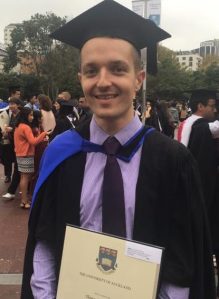
13226773_10153613046988683_2596308080632854044_nMy son Thomas graduated with his Master of Science last week. The hard work for him seems to me to be long ago and it would be easy to be cynical about the graduation event – a lot of pomp and ceremony just to pick up a certificate. Like Mum’s 85th it brought family together. Great happiness and I’m pretty proud of my big boy too. Data Scientist extraordinaire.
You don’t have to accept my proposition about life’s meaning, but you sure can find some happiness in the simplicity of family, in whatever form that takes for you.

Stephen

Grandma’s insight

Lovely to see you come, and lovely to see you go“. So said Grandma in about 1974 after nine of us were about to depart after three weeks or so in her flat and bach. Such harsh words I thought. Surely she was sad to see us go? After all she was quite old I thought and you never know, this could be the last time (turned out she had another 16 years!).

Of course as a boy I didn’t appreciate the stress that a large group of visitors in Grandma’s flat in Sandringham and at her bach in Stanmore Bay might have caused. They were just great holidays. A long road trip from the South Island, beaches, swimming, hot days, sun burn, Waiwera hot pools and barbeques.

I had dear friends stay in the weekend (so in case they’re reading I’m not about to do a Grandma). W12657243_10206633536649957_1152946458479811167_oe cycled, dined, did some gardening and watched movies.

A colleague commented to me the other day that when you’re an extrovert it’s not always straightforward to explain to those close to you that you need downtime. Which I have found to be true.

I’m an extrovert and part of me needs recharging with time alone. More so as I’ve got older (which might be another post).

Thanks to Grandma for the wise leadership insight all those years ago.

Stephen

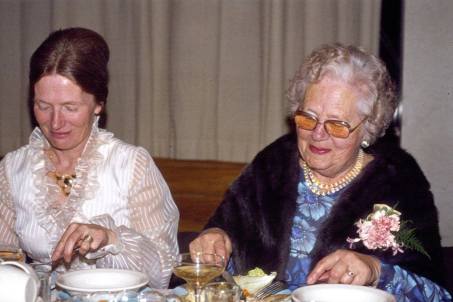
p.s. this is her in 1979 with my mother. I can imagine she’s smiling from being reminded about this story.

Back on the streets

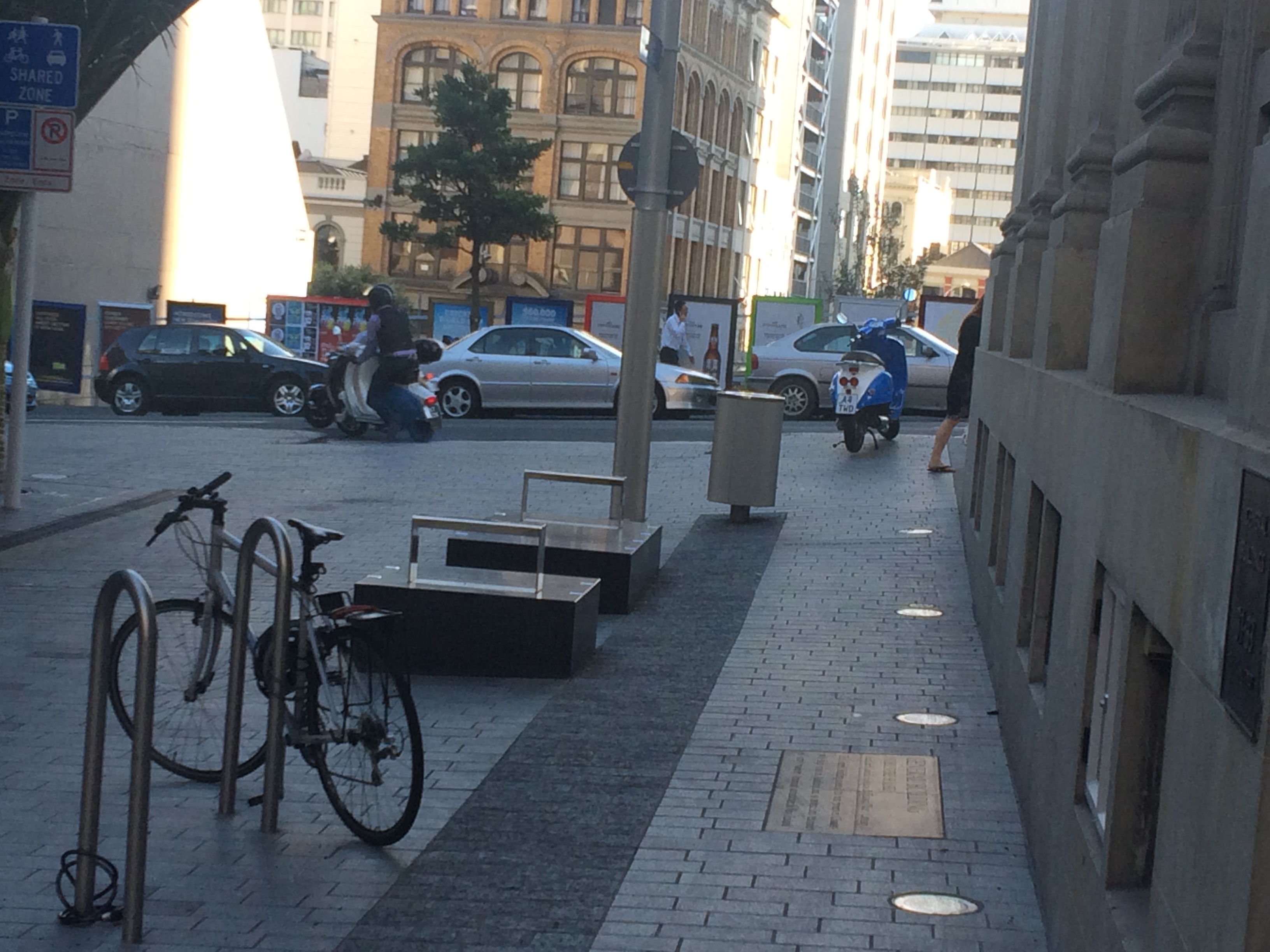
After a month in Europe it was great to back on the bike to and from work. I don’t cycle every day, but I try for three times a week. It’s 9 kilometres give or take, half or which is on dedicated cycle lanes and half on a bus lane. Cycling on a bus lane is not for the faint-hearted, but I’ve only had good experiences with buses – it’s the cars that cross or enter the lane who create challenges.

Rush hour in Copenhagen

I had an impression that cycling in Berlin and Copenhagen would be quite special. It was. But not just for the infrastructure – I’ll come back to that shortly – but for the attitude of the residents. A cycle lane means a traffic lane for cycles that you respect as you would another lane of traffic – more so in fact because cyclists are obviously vulnerable – not a nuisance or barrier for ‘real’ traffic (as can often be the local experience). Cyclists are sensible too – not aggressive to each other or other road users – but like most traffic in Europe they move with intent. One of my sisters said that she’d be too timid to cycle on a cycle lane in Copenhagen – too busy she said – and she’s right, it is busy.

Some streets are just made for cycling

I found it invigorating to be cycling with so many like-minded people. And it’s not just the hardy or lycra- wearing (of which there were very little). But parents picking up their children after day care, business people commuting and Seniors getting around doing their shopping. Many apartments appeared not to have car parks in Copenhagen, but there were lots of cycles parked everywhere. A different normal.

Auckland has much to offer cyclists. Just get out there and do it!

Now Auckland is not flat like either of those two cities so there are challenges for cyclists (which e-bikes solve quite easily). Copenhagen was anything but a cycling city in the mid 1960s but decisions made to retrofit cycling infrastructure and prioritise roads for cyclists made it what it is. And there’s lots of signs of on-going improvements and changes to this day.

We’re at a tipping point in Auckland with some fantastic projects completed and underway which have the potential to transform the use of cycling as a viable means of transport. Normalisation and attitude changes to embrace commuters on cycles will hopefully follow. That’s when the tipping point will have been realised.

So why bother? It’s clean, healthy, reduces the need for roads to be built and above all else (if you want to be selfish), it’s so much fun! And being joyful is as good a reason as any to get on that bike. If you haven’t tried it for a while, I bet you’ll be smiling in no time. Chances are it will be faster than the car.

And what’s this got to do with leadership: You’ll start and finish the day in a much better mindset and it feels an authentic and connected way to move around. A virtuious cycle you could almost say!

Stephen