Day 27

Day 27

It could have been the penultimate Lockdown blog, but we’ve still got five more days. David Bowie’s Five Years comes to mind for no other reason that it’s five, although that song is about the end of the earth coming in five years.

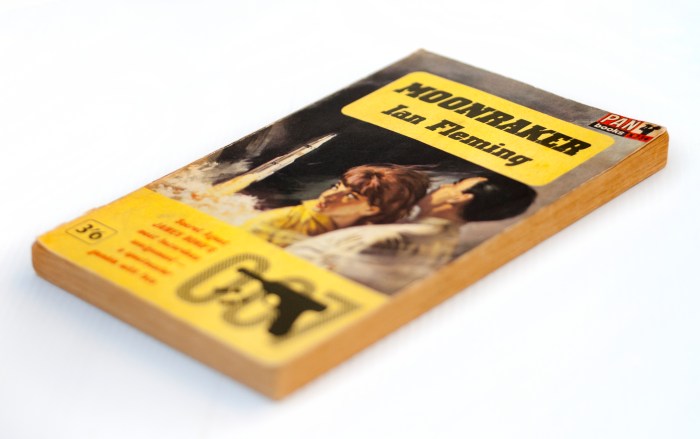
Thinking, hoping that it might be only one day to go I went back and looked at the earlier blogs of the Lockdown. Quite a bit of talk of anxiety and being indoors. It did kind of scare me a bit at the beginning.  The 80sqm apartment, my love of freedom,  I think I was a bit sceptical reasonably early on – or more questioning – as it worried me and still does, that the media have acted like an arm of the official information bureau, rather than any deep questions. I mused about what I would do – watch all 25 Bond movies – I’ve watched one only.  Moonraker with Roger Moore – great sets, actually a really good story, but the lines. Ouch, James Bond 007 The Sleaze!. I finished the third series of Ozark and nothing else on TV has really held up well in comparison. As the days stretched into weeks I’ve felt my rational mind more active and have read lots about COVID-19 and consumed a lot of data, some of which I’ve shared here.
People I know have a range of views but many people, sadly I think, appear consigned to defeatist – or they would say realistic – unquestioning compliance. At the risk of sounding like a consultant, that’s not to say that we’re not doing the right thing.  But I think we should, must! question such a massive imposition on our lives the impact of which is long term for many.

On our leadership programmes we really encourage the leaders on the programme to do serious self reflection. At first it’s not natural – it can be seen as time consuming when real work could be done. But as we do more of it, there are real moments of clarity and insights that can cause material and long-lasting change for people in their lives. This is the unquestionable beauty and satisfaction of this work. But it needn’t be a programme or a special event that drives reflection.

This electronic, public diary has helped me to process my thoughts. The changes forced upon us these last few weeks have given me deep and unexpected insights about my own behaviours. I’ve realised that I derive quite a lot of contentment from being much more structured that I have in the past. I feel confident that this new structure is something I take forward. It’s happened on the back of other reading I’ve done – Cal Newport’s Deep Work – is the main reading, so it’s been a happy coincidence. I don’t know whether reflecting each day has been the deciding factor in these insights, but it’s almost certainly accelerated it.

As a police cadet there were a few unusual things we learned. We learned a lot about death and dealing with it practically and emotionally. This has come up quite a bit for me these last few weeks as there’s been lots of dialogue about death, and as my rational mind has come forward, it’s played out here. I’ve felt it’s been quite healthy and therapeutic for me to discuss it here and I do hope it’s not been too confronting.

Another thing we learned about at the Police College was what act is the act that makes an attempt. That is, how close to the crime does the act of the suspect need to be to be an “attempt”? If you’re going to rob a bank, does buying the guns cut it? Does getting into the Ford Transit van to drive to the bank do it? Does marching into the door and demanding to be let in through the sliding doors do it? The answer is, you look for the “penultimate act”, which would be the last example here. The one before is the anti-penultimate act and doesn’t cut it. Of course there might be conspiracy, possession of weapons etc, but not attempted robbery. Some things stay with us forever. Hopefully yours are more useful than the need to explain anti-penultimate just because you started a short dialogue using penultimate. And I haven’t gone all totally structured!

Reflection using everyday tools of deep thought, writing, processing, sharing and being honest with yourself can bring amazing changes for the better for anyone who wants to give it a crack. Those things can stay with us forever and for good.

Stephen


Day 25

Day 25

It was like one of those old school Sundays where it’s a bit cold outside, there’s nowhere to go anyway, and the inside is full of warmth and activities. I read The Calculus Affair today. Yes I know the story but it’s got some of my favourite components of Tintin – Marlinspike Hall, the Trains in Europe and the cities with amazing details. And funny too.

It wasn’t exactly funny, but the 1pm press conference did seem fairly upbeat. After saying that no decision has yet been made,  in response to a question about business the prime minister said that retail, hospitality and other businesses should be getting themselves readied for opening with social distancing. She said that although level 3 will mean some relaxation for business, the social relaxation is not a thing. Perhaps we should tell her we’ve actually been doing quite a bit of relaxing! Or did I just get my relaxings all mixed up. Anyway, I’m pretty relaxed about it.  Someone mentioned that they’re getting ready to start working on Thursday in a cafe although they probably don’t know any more than the rest of us. Either way, expectation is building of a partial release – let’s say it’s going to be a pre-release work experience type of thing.

As well as Tintin, I also did some reading on Worldometer.  It seems the whole world is obsessed with infections and death rates. For a while there, it had a bit of Olympic Games medal table feel about it – who would get the top of the table, but it’s serious of course – people are dying. It looked like China at the top for many weeks, but that seems a life-time ago and the infection rate in the US is now just less than one-third of the total infections, but only 24% of the total deaths. Dare I say it, they must be doing something right, having let the ‘rona loose.

Since I last looked, the rate of those in serious condition as a percentage of active infections is down to 3%. The percentage increase in deaths has been on a decline for two weeks now. It doesn’t matter what data you look at, the vast majority of deaths are in the 65+ age group, and most have underlying conditions. That doesn’t mean that there are exceptions to this rule and everyone knows of an example that doesn’t meet the majority. Not so in New Zealand though. On the information available none of the deaths in New Zealand had COVID-19 as the underlying cause of death. We don’t know all the actual ages of those whose deaths are attributed to COVID-19 in New Zealand, but using an assumption that someone described as in their 80s is 82.5, and 90s is 92.5 and so on, so as to not overstate it, then the median age is 82.5 and the average age 83.5. We are not an outliner. In Italy 83% of deaths are in people aged over 70.

Here’s some predictions. When we look back the death rate of humans on the planet for 2020, it will not be materially different to other years. The virus squeezed the mortality rate into a compressed time frame. That compression of mortality is without doubt the main reason why action was required to not overload the health system, as is happening in the States. Sound harsh and unfeeling? 150,000 people die each day on earth. At least 500,000 people die each year from influenza and you’d have to think that social distancing and isolation measures will reduce that materially.  Will the ‘rona cause worse rates of fatalities in Africa? Unlikely, the age demographics are wrong – median age in all of Africa is 19.7 years, compared to Europe at 43.  But it won’t be a picnic either, as health services are likely poor.

So 4pm is when we’ll crowd around the radio, Michael Joseph Savage style, crackling reception, have the valves even warmed up yet?, waiting “Where she stands, we stand“.  Okay, so it’ll be “Breaking News” on the television even though we know it’s coming.  Hopefully it’s breaking the Home-D.  Either way it’s a significant leadership opportunity.

Leadership is not for the faint-hearted. In this matter, we have replaced a possible medical crisis, with an absolute economic and social crisis. Breaking the cycle of STAY HOME! will not be easy and requires courage and an acknowledgement that it’s time to let go.

Credit to Peter Bromhead for the cartoon. Captures it perfectly I reckon.

Stephen


Day 24

Day 24

Writing the titles for this series of blogs has been pretty straightforward, obviously.  Writing it today I had a sense of it coming to an end soon. Slightly melancholic feeling, which is weird after wishing the time away.

The Lockdown will probably end to be replaced by another form of restriction, but the Lockdown blogs will end with Level 4 ends. OK!

The sharemarket – as if its a being – appears optimistic about the current economic prospects. Shares have largely rebounded strongly, not regaining all the gains of the last few years, but quite a bit of it. Investors are seeing signs that COVID-19 as a medical issue is largely dispatched, and the economy can fire up again. Yes it’s more complex on both fronts, but I think that’s the perception.

The government led us strongly into economic freeze to stop the ‘rona spreading. It will say there’s still lots to be done, but by the look of the amount of traffic on the streets today, many people have stopped listening. Business is coming back ready or not I think.

I went on a walk again today, a long walk, Maungakiekie and Cornwall Park, Te Kopuku/Mt St John and Maungawhau/Mt Eden. The body needed a big workout to match the mental energy this past week and it paid off.

Do watch Unorthodox on Netflix which I finished tonight. If you don’t need to wipe your eyes you might be a sociopath! It’s only four episodes.

Although there’s quite a few things I like about the Lockdown, I do miss the weekend drive, the coffee in the cafe and riding my motorbike.

So the challenge is to hold on to new ways whilst grabbing back the best of the past.

Leaders can make this their mantra in the refreshed world in a week or two.

Stephen

Day 21

Day 21

We turned 21 but we didn’t get the Key! Battle lines are being drawn between experts.

One group, who advise the government, says that the risks of COVID-19 can’t be understated, that Lockdown is vital and we’re so far doing precisely what we should have been doing to eradicate the virus from New Zealand.

On the other side are experts who say that the risks for most people are overstated and that the main impact of the the virus is to compress the mortality of a certain group from twelve months to two weeks. They say that we can’t ever expect to eradicate the virus, that’s just not practical.  Of course, there’s more to it than that but these are the highlights (or lowlights really).

iStock-1214440800.jpg

The first group will be saying that at Alert level 3 there should be severe restrictions on movement and that a return to level 2 should be measured and slow, ensuring all risk is eliminated.

The second group essentially proposes a return to level 2 now, but with Lockdown applying to those over 70 (or maybe 60) and those with low immunity.

One of the specialists from the first group suggested that this proposal was impracticable. I doubt it’s any more impractical than what we have! Which is not to say he was wrong but it’s hardly a fighting argument.

Naturally group two has the support of many business people who say that the medicine is worse than the disease.

Adversarial processes are used commonly in law and in parliament. They promote a “winner takes all” approach to settling a dispute. As the economy and society hemorrhage from the Lockdown we’ll see more of this advocacy.

Good leaders build consensus and in my experience, business leaders are generally excellent at it. Command and control has its place – including during a state of national emergency – but consensus will be far more sustainable in the long run.

So it’s an odd situation. We have a government that built a consensus across the political spectrum to go into Lockdown. This Lockdown was built on evidence that was available at the time – 80,000 will die if we don’t respond – and that we would be the next Italy if we didn’t take action.

A few weeks on a lot has changed. There is little doubt that the measures have squashed the curve. But we’re more or less being given the same evidence – the dementia patients dying has been cited as why we can’t relax. I know this sounds harsh, but the majority of those patients have “Do not resuscitate” orders against them. These are folk who, sadly, their loved ones have made that very tough decision about. I’ve been involved in one of those decision. You do what’s right.  These folk do not represent or crystallise a real and present danger to what the majority in the community might face. They do explain why we need to flatten the curve so hospitals are no overwhelmed. We’ve done that.

The toughest calls are not always what you do. In my work sometimes we make calls not to go for something. They’re really tough and you fight against all your commercial instincts to do what’s right. That’s not in anyway to compare the gravity of the calls that might need to be made, however, leaders need to know when not doing something is right.

I remember when the fourth Labour Government put an end to shopping restrictions in the weekend. I remember clearly the great feeling of freedom that, finally, here was a government that wanted to stop telling us what to do!

I’m hoping for a grand consensus and freedom for those who need it, and relevant restrictions and, yes, use some of that $52B in emergency funding, and pay whatever it takes to keep those most at risk safe and secure.

Too much sitting at my computer on video calls have started to take their toll. Some soreness in joints that shouldn’t be there so I’m going to try and take a day time walk tomorrow. The walking jacket is now always on hand. The summer walks are over.

Let me out!