Courage

Aibileen and Minny are maids in the movie The Help.  They live in Jackson, Mississippi – as in Johnny Cash and June Carter’s duet of the same name –  in the 1960s.  With segregation enshrined by law, the women raise all the white kids as defacto mothers, while the birth mothers, although raised by the same maids, treat them largely with disdain and, pretty much like slaves.

A courageous young white woman, Skeeter, decides to tell the stories of The Help.  She’s not the only courageous one of course.  Aibileen, Minny and all the other maids who collaborate show exceptional courage against their own immediate interests to tell their stories. Stories of love, hate, of raising numerous kids, of missing out on their own children’s upbringing and of not being able to use the toilets in the house, ‘cos they had the wrong skin colour.

I read an article today about simplicity in leadership. It struck a chord with me, so I’ll keep this blog short and simple.

Being courageous requires doing the right thing, often against self interest and immediate gain or acceptance. Authenticity. What will you do today that is courageous?

Stephen

ps great cars and music in the movie too
Are you expected to be 24/7?

I’ve taken a few days off to, well not to do too much, but sorting out things at home, having lunch, even some cleaning, changed a couple of light bulbs that had been staring at me, dead, for quite a while. Even cleaned the fish tank.

Recently the Auckland District Health Board announced that they were considering not employing people who smoked. If health workers are to engage patients then they need to role-model the behaviours that are expected. I must admit I feel less confident if I’m seen by a Doctor who looks like he or she might be overweight, have high blood pressure or in otherwise risky condition. Of course what do I know, but you do get a sense!

I’m still responsible for the Centre for Innovative Leadership while I’m on leave but I’m sure you’ll agree I can do my own stuff, how I like and when I like. Role-modelling in leaders is arguably the most powerful of all leadership attributes and happens whether you like or not.  I often simplify leadership to the concepts of resilience, relationships, change, teams, adversity and vision. Most things flow from a leader’s ability to exhibit positive engagement and pro-activity in these aspects of leadership.

So if you’re not in good health, a narcissist (but relax you can’t help it, just stay away!), can’t maintain relationships with those you work with, or pretend to like teamwork but really only like that there’s a team doing your work, then leadership might not be for you.

And if you work for the health board looking after the sick and injured then it’s probably a fair bet that your patients are wanting to trust what you say, as well as what you do. Smoking doesn’t really cut it in that sphere.

So you don’t need to be on full alert 24/7. Afterall, authenticity doesn’t need such vigilance, it’s authentic and natural, just like the work means. You do need the characteristics of leadership 24/7 though, otherwise you aren’t role-modelling. Which is why I’m running on my days off to keep my resilience up (and my trousers fitting too!). Not just because it’s a role-model of leadership, but because it’s who I am.

Stephen

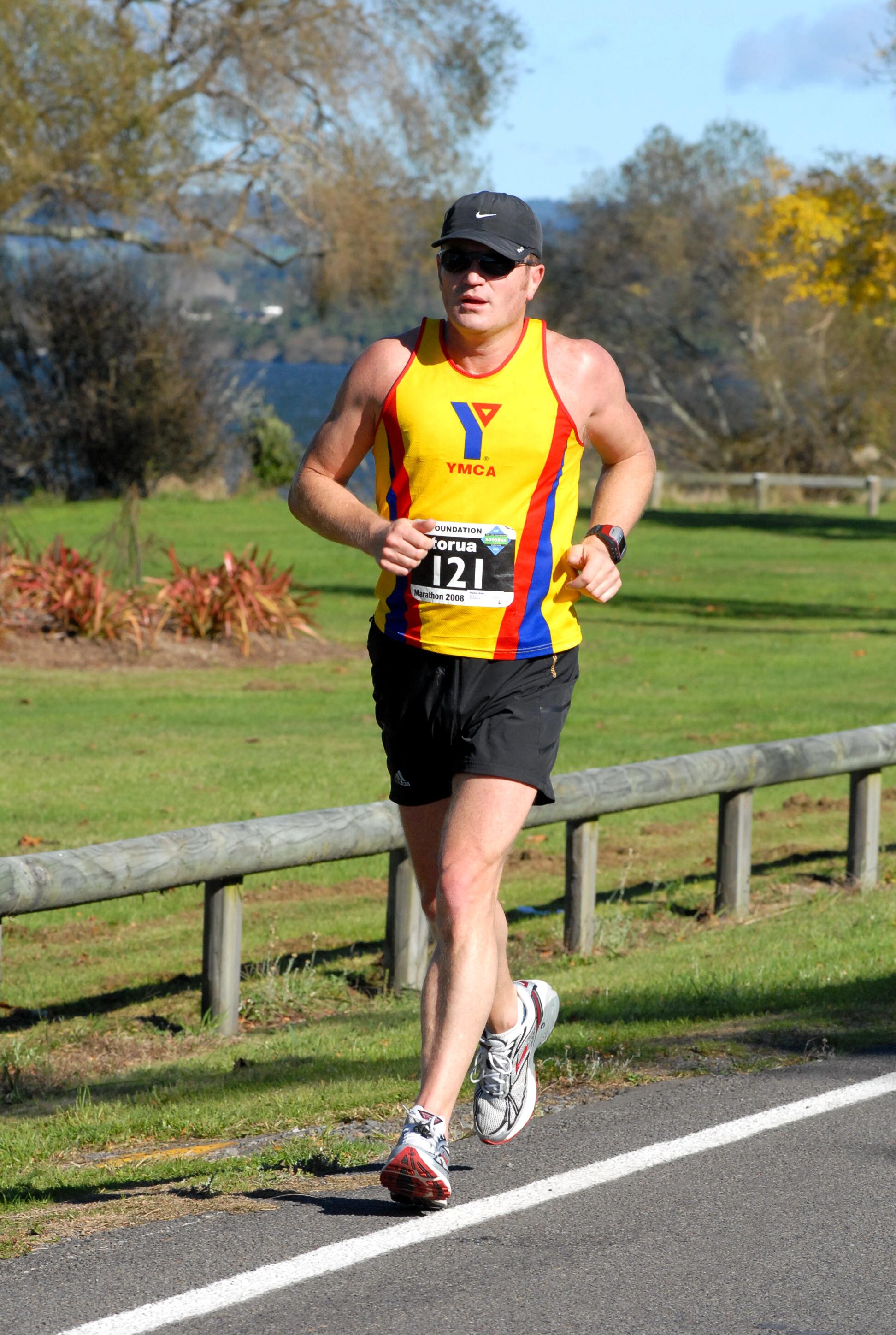
ps And I’m determined to get in as sharp a shape as I was here for a PB!

Slipping up for good

It’s the 25th anniversary of the opening of the Freud Museum in London this week. Freud is famous for his study of Psychoanalysis and the Freudian Slip is a principle he came up with that says that when you slip up and say the opposite of what you meant to say or contrary, to what you meant to say, it’s because it’s what you really meant to say.

Has this ever happened to you? It’s not very authentic is it? Saying the opposite of what you actually mean to say. But then again like Jim Carey in the movie Liar Liar, you probably don’t want to walk around saying every thought you have. Or would you? Perhaps if you only had good thoughts then it would be okay, but inside me I humour myself with irony and absurdity that I see wherever I go. You don’t want to hear all that!

But sometimes slipping up with the truth is the right thing to do. Actually I’m not happy that this is not been attended to, rather than okay, let’s get onto this tomorrow.

After being away in Martinborough for most of the week last week running a leadership programme, I turned up to a mountain of stuff to be done. I worked rapidly and with intent. I said exactly what needed to be done and when it needed to be done. Someone said they hadn’t seen me like that before.

Authenticity is about your strengths and where you come from. Empathy is about seeing others’ perspectives. Can they co-exist? Yes, but sometimes you need to let Freud take over and say it as you authentically mean it. Others might need to see you perspectives very clearly!

Stephen

The story network

I watched The Social Network the other day again while in Whakatane. It’s a story of the founding and growth of Facebook. It’s got a lot of stuff in it – seizing the moment, innovation, right time right place and, not to forget, an idea that connects people. I connect with family and friends on Facebook and see photographs and snippets from those not close by and those close by that I wouldn’t necessarily see easily.

Being too busy right now, a quick look at Facebook can keep me in the loop and provide light relief at times. In facilitation of any sort I’ve noticed it’s sometimes expected that there is level of content delivered, I mean stuff that you can physically hold and take back to the office. In my ideal world we wouldn’t need any of that stuff, we would talk, gather insights, grown and practice with each other to take back to work and home. We’re getting there, Powerpoint is pretty insignificant in my faciliation now, so that’s a start.

While in Whakatane last week we worked with the local iwi. Stories are an intregal component of building relationships in Maori culture and as part of our welcome we shared stories about who we were and why we were present. It was identical in form and content to the ’rounds’ we use in our leadership work.

This week at Waitakere Estate with a leadership team we’ve built the basis of a shared vision, learned about our working preferences, played outside all of which has inevitably led to story-telling.

What I’ve started noticing since facilitating Story telling workshops is that as leaders, we can turn so much of our work into story-telling coaching opportunities. We’ve all got a story and if we can all build those in our team to develop their stories, we can create The Story Network.  And when we do that we’ll grow our organisational culture, engage those in our teams and have some fun!

Go for it!

Stephen